A successful corporate conference in Dubai requires more than a strong agenda. It needs the right venue, reliable AV production, clear delegate flow, well-planned breakout sessions, thoughtful hospitality, and a delivery team that can manage every detail from concept to execution. This corporate conference planning guide for Dubai venues and technology explains how to build a conference that is strategically sound, operationally smooth, and memorable for every attendee.
At Celestine Event, we approach corporate event planning through what we call the Conference Precision Framework: purpose, place, production, people flow, and experience. Each decision, from venue sourcing to registration desk design, should support the business objective of the event and protect the attendee experience.
What Corporate Conference Planning Involves in Dubai
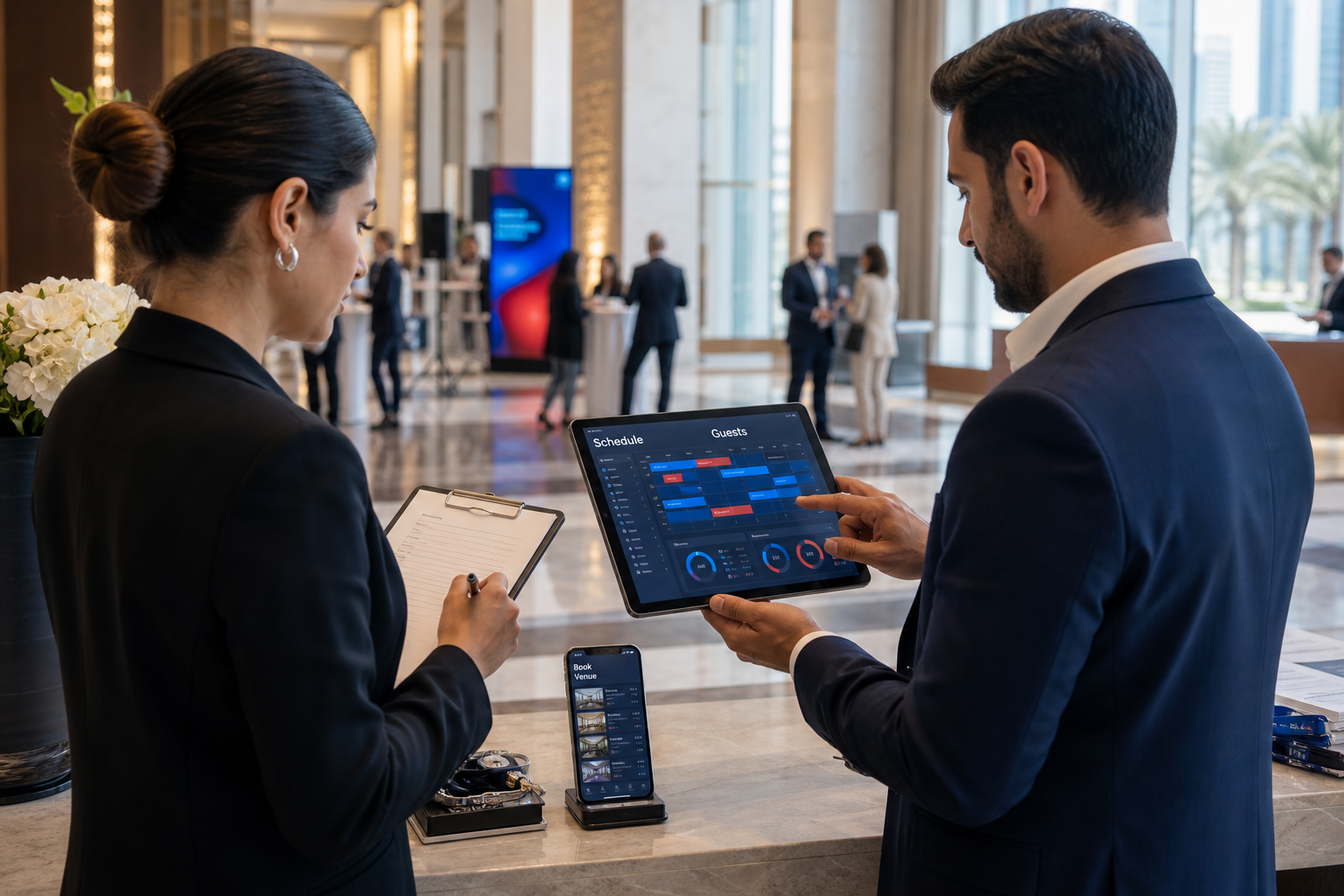
Corporate conference planning in Dubai involves strategy, venue selection, logistics, event technology, supplier coordination, guest management, hospitality, and on-site execution. Dubai is one of the world’s most capable destinations for business events, with international connectivity, premium hotels, world-class venues, and strong hospitality infrastructure. But that opportunity also brings complexity. The best results come from planning with precision rather than treating the conference as a simple venue booking exercise.
A complete corporate conference planning checklist for Dubai should include:
- Conference objectives: Define whether the event is designed for education, sales enablement, investor relations, leadership alignment, product launch, networking, or brand positioning.
- Audience profile: Confirm delegate numbers, seniority level, languages, accessibility needs, travel requirements, and hospitality expectations.
- Venue sourcing: Shortlist Dubai conference venues based on capacity, location, room flexibility, technical infrastructure, accommodation access, and brand fit.
- Agenda structure: Plan plenary sessions, keynote speeches, panel discussions, breakout sessions, networking breaks, meals, and evening experiences.
- AV production: Specify sound, lighting, LED screens, projection, staging, interpretation, recording, live streaming, and speaker support.
- Event technology: Include delegate registration, event apps, QR check-in, audience polling, digital signage, lead capture, hybrid tools, and analytics.
- Conference logistics: Plan delegate arrival, transport, security, wayfinding, cloakrooms, VIP handling, backstage areas, and emergency procedures.
- Catering and hospitality: Design menus, coffee breaks, dietary management, service timing, networking formats, and VIP hosting.
- Supplier coordination: Align venue teams, AV partners, decorators, transportation providers, production crews, entertainment, hosts, and brand teams.
- Risk management: Prepare contingency plans for technical failure, speaker delays, crowding, weather, transport disruption, and schedule changes.
- Post-event reporting: Capture attendance, engagement data, feedback, media assets, and lessons for future improvement.
What most conference planning advice gets wrong is that it treats these elements as separate tasks. In practice, every choice affects the next. A venue with weak loading access affects production timing. A late registration flow affects keynote punctuality. An unclear breakout plan affects delegate satisfaction. Strong conference planning connects all decisions into one integrated operating system.
How to Choose the Right Dubai Venue for Your Conference
To choose the best venue for a corporate conference in Dubai, assess location, capacity, technical infrastructure, room flexibility, brand alignment, guest access, accommodation, catering capability, and operational support. The ideal venue is not always the largest or most luxurious. It is the venue that fits your conference format, audience expectations, production needs, and movement plan.
Dubai conference venues range from luxury hotels and beachfront resorts to convention centres, business districts, cultural venues, galleries, and multi-purpose event spaces. Each option has advantages. A five-star hotel may be ideal for a leadership summit with international executives. A convention centre may suit a large-scale industry conference with exhibition booths. A creative venue may support a product launch or brand-led experience where atmosphere matters as much as seating capacity.
When comparing venues, use these criteria:
- Location and accessibility: Consider proximity to Dubai International Airport, hotels, metro access, parking, business districts, and planned social events.
- Main hall capacity: Confirm seated capacity in theatre, classroom, cabaret, banquet, and hybrid formats, not just maximum room capacity.
- Breakout room availability: Ensure the venue can support parallel sessions without long walking distances or acoustic disruption.
- Ceiling height and sightlines: Check whether LED screens, stage sets, lighting rigs, and camera positions work for every seat in the room.
- Built-in AV infrastructure: Review power supply, rigging points, internet bandwidth, lighting controls, and in-house technical restrictions.
- Loading access: For production-heavy conferences, loading bays, service elevators, and build-up windows are critical.
- Foyer and registration space: The arrival area must handle peak delegate volume without congestion.
- Catering flow: Coffee breaks and lunches should be close enough to maintain schedule discipline but spacious enough to encourage networking.
- Accommodation and transport: For international delegates, room blocks and shuttle planning can significantly improve punctuality and comfort.
- Brand fit: The architecture, service style, views, and surrounding environment should reflect the tone of the conference.
A practical method is to score each venue across three layers: strategic fit, operational fit, and attendee fit. Strategic fit asks whether the venue supports the brand and conference objective. Operational fit examines production, logistics, and supplier access. Attendee fit considers comfort, navigation, hospitality, and overall impression.
For deeper venue planning, many organisers also prepare a dedicated comparison process covering hotels, convention centres, and hybrid venue models. This is especially useful for teams researching the topic of choosing a business conference venue in Dubai and comparing criteria before committing to a location.
Technology and AV Essentials for Seamless Conference Delivery
A modern corporate conference needs professional sound, lighting, screens, staging, internet, speaker support, recording, live streaming where required, digital registration, signage, audience engagement tools, and a technical rehearsal process. Technology should not feel like an add-on. It is the infrastructure that carries the message.
Core AV production requirements usually include:
- Audio: Clear speech reinforcement, lapel microphones, handheld microphones, panel microphones, confidence monitoring, and backup systems.
- Visual display: LED walls, projection, confidence monitors, presentation screens, timer screens, and branded holding slides.
- Lighting: Stage wash, audience lighting, scenic lighting, camera-friendly lighting, and lighting states for key moments.
- Staging: Stage design, lecterns, panel furniture, ramps, accessibility, branding, and sightline management.
- Video production: Camera coverage, live switching, recording, live streaming, remote speaker integration, and post-event content capture.
- Connectivity: Dedicated internet lines, Wi-Fi capacity planning, presenter connections, and backup networks for critical functions.
- Interpretation: Translation booths, headsets, multilingual support, and language channel management for international conferences.
- Speaker management: Green rooms, slide review, cueing, rehearsal schedules, and technical briefing documents.
Event technology also plays a major role in delegate engagement and operational control. Registration platforms can reduce queues with QR check-in. Event apps can provide agendas, speaker bios, maps, polling, networking tools, and push notifications. Digital signage can direct delegates between sessions. Analytics can show attendance patterns, session popularity, and engagement levels.
For conferences that require immersive or hybrid formats, technology planning should begin early. The production design affects venue choice, room layout, speaker preparation, sponsor visibility, and content capture. Our guide on how to create a tech-forward conference experience explores this in greater detail, including how to use technology to enhance rather than distract from the programme.
One lesson from experience: the most important technical moment often happens before delegates arrive. A structured rehearsal, with real slides, actual microphones, full cue sheets, and timed transitions, prevents many issues that are otherwise blamed on “technical problems.” In reality, many failures are planning failures disguised as AV failures.
Breakout Sessions, Registration, and Delegate Flow: Logistics That Work
To manage breakout sessions and attendee flow without delays, planners need clear zoning, timed transitions, accurate room capacities, visible signage, trained ushers, digital registration, and a realistic agenda. Delegate movement should be designed with the same care as the keynote stage.
Breakout session management is one of the most common pressure points in corporate conferences. A main session may appear smooth, but delays often emerge when hundreds of attendees move to smaller rooms at once. The key is to design the building experience around natural movement.
Effective breakout logistics include:
- Session mapping: Assign rooms based on expected attendance, topic popularity, speaker needs, and proximity to the main plenary.
- Capacity control: Use pre-registration, app-based selection, or live scanning to prevent overcrowding.
- Clear timing: Allow realistic transition time between sessions, especially in large hotels or multi-floor venues.
- Wayfinding: Use directional signage, floor decals, digital screens, colour-coded tracks, and staff positioned at decision points.
- Room resets: Schedule enough time for furniture, microphones, water, branding, and speaker checks between sessions.
- Speaker coordination: Assign a room captain or producer to each breakout room for cueing, timing, and issue escalation.
- Contingency planning: Prepare overflow rooms, content relay options, and quick signage updates if demand shifts.
Delegate registration is another area where planning quality becomes visible. A slow check-in experience can affect the entire opening session. For a conference of 500 delegates, even a 20-second delay per person can quickly create long queues. QR code check-in, alphabetised help desks, badge pre-printing, dedicated VIP lanes, and clear pre-event communication can significantly improve arrival flow.
Attendee flow should also be considered at coffee breaks, lunch service, exhibition areas, networking lounges, cloakrooms, transport points, and restrooms. In Dubai, where many corporate conferences include international guests, arrival timing can vary due to hotel transfers, airport arrivals, and VIP movements. A strong operations plan anticipates this rather than reacting on the day.
Catering, Hospitality, and Attendee Experience Design
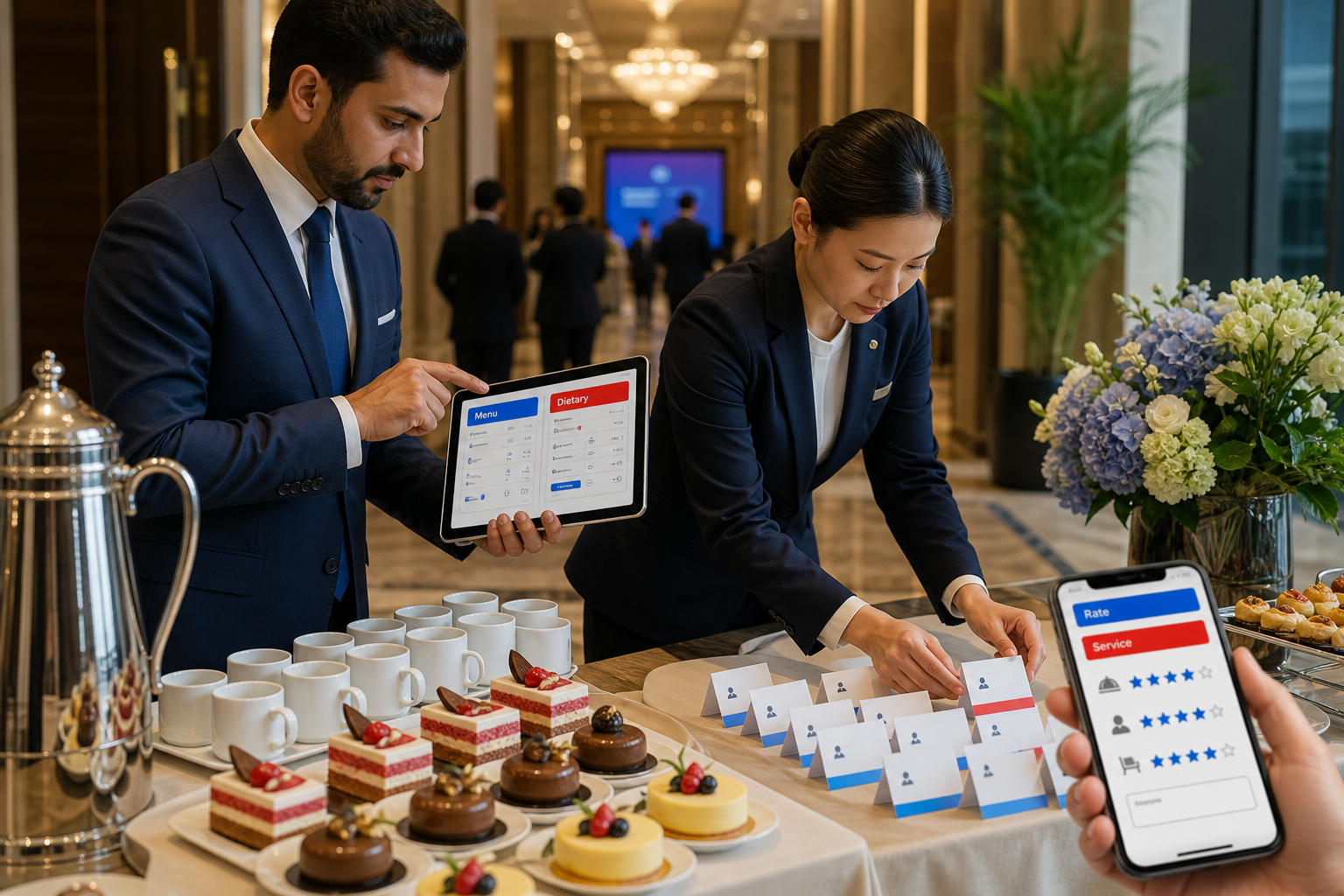
Catering and hospitality shape how attendees feel, connect, and remember the conference. A well-designed attendee experience is not only about premium service; it is about timing, comfort, relevance, cultural awareness, and thoughtful details.
In Dubai, hospitality expectations are high. Delegates often expect efficient service, elegant presentation, dietary sensitivity, and smooth transitions between business content and networking. Catering should support the agenda rather than interrupt it. Coffee breaks should be long enough for real conversation but not so long that energy drops. Lunch formats should reflect the type of audience: seated service for senior leadership, buffet for networking, or grab-and-go for fast-paced conference programmes.
Key catering and hospitality considerations include:
- Dietary management: Collect requirements early, including vegetarian, vegan, halal, gluten-free, allergies, and cultural preferences.
- Service timing: Align catering with session endings, prayer times where relevant, transport departures, and evening programmes.
- Networking design: Arrange food stations to prevent bottlenecks and encourage movement across the room.
- VIP hosting: Prepare private lounges, dedicated hosts, secure entrances, premium refreshments, and discreet escorting.
- Brand integration: Use menu cards, table styling, coffee carts, branded desserts, or hospitality moments that support the event identity.
- Wellbeing: Include hydration points, comfortable seating, clear breaks, natural light where possible, and balanced menu options.
Attendee experience design also includes sensory and emotional details. Lighting, music, scent, room temperature, seating comfort, queue time, signage clarity, and staff tone all contribute to perception. A conference may have excellent speakers, but if attendees feel lost, hungry, rushed, or uncomfortable, the overall impression suffers.
At Celestine Event, our philosophy of Crafting Timeless Experiences means creating an environment where delegates can focus fully on the content, relationships, and purpose of the gathering. A client once told us after a leadership summit, “Your team made a complex event feel effortless to our guests.” That is the standard we work toward: invisible precision behind a memorable experience.
How We Manage Multi-Day and Multi-Venue Corporate Conferences
A multi-day or multi-venue conference is successful when the agenda, venues, transport, technology, hospitality, staffing, and communication plan operate as one connected system. Multi-day conference planning requires consistency across every touchpoint while allowing each venue or day to have a clear purpose.
Dubai is especially well suited to multi-venue conference formats. A programme might include an opening plenary at a hotel ballroom, breakout sessions at a convention venue, a gala dinner at a landmark location, executive meetings in a private suite, and a closing experience at a cultural or waterfront venue. This can create a powerful delegate journey, but only when conference logistics are tightly controlled.
Our multi-day and multi-venue planning process includes:
- Master event architecture: We map the full delegate journey across days, venues, transport, content, meals, and networking moments.
- Venue role definition: Each location has a purpose, such as education, celebration, networking, exhibition, or executive engagement.
- Transport planning: We coordinate shuttle timing, VIP vehicles, traffic buffers, parking, hotel pick-ups, and contingency routes.
- Central command structure: A core operations team oversees the full event while venue-specific teams manage local execution.
- Unified branding: Signage, staging, digital assets, badges, menus, and hospitality details remain consistent across venues.
- Technical continuity: Presentation formats, speaker support, recording standards, internet needs, and show-calling protocols are aligned.
- Guest communication: Delegates receive clear schedules, maps, transfer instructions, dress codes, and updates through appropriate channels.
- Risk planning: We prepare backup transport, weather plans, technical redundancies, medical support, and escalation procedures.
Multi-venue events require particular attention to handovers. A common mistake is assuming that success at one venue automatically transfers to the next. It does not. Each location has different access rules, load-in routes, staff teams, acoustic conditions, power limitations, and guest flow patterns. The planner’s role is to make those differences invisible to attendees.
For a more detailed operational breakdown, our guide on how to plan a multi-venue conference in Dubai explains how to structure venue sequencing, transportation, supplier coordination, and guest communication across multiple locations.
An experienced Dubai event partner reduces risk by knowing what to test, what to document, and where delays usually occur. We look beyond the visible event and manage the hidden dependencies: supplier access, elevator timings, AV compatibility, local regulations, VIP privacy, traffic conditions, meal service timing, and last-minute agenda changes. This is where experience protects both the brand and the delegate experience.
Celestine Event was founded in India in 2011 and is now headquartered in Dubai, serving corporate clients, brands, exhibition organisers, and international stakeholders. Our work spans corporate conferences, press conferences, exhibition booths, live shows, fashion events, sports event management, and luxury brand activations. Across each format, our promise remains the same: transforming vision into reality with creativity, innovation, and meticulous attention to detail.
Corporate Conference Planning FAQ: Common Questions Answered
What should be included in a corporate conference planning checklist for Dubai?
A Dubai conference checklist should include objectives, audience profile, venue sourcing, agenda planning, AV production, event technology, delegate registration, catering, transport, staffing, supplier coordination, risk planning, and post-event reporting.
How do you choose the best venue for a corporate conference in Dubai?
Choose a venue by evaluating location, capacity, breakout rooms, AV infrastructure, loading access, internet, accommodation, catering quality, delegate flow, and brand fit. The best venue supports both the business goal and the attendee experience.
What AV and technology setup does a modern corporate conference need?
Most modern conferences need professional audio, lighting, screens or LED walls, staging, speaker support, reliable internet, digital registration, event apps, live streaming or recording where needed, and audience engagement tools such as polling or Q&A.
How do you manage breakout sessions and attendee flow without delays?
Use pre-planned room assignments, capacity tracking, colour-coded signage, trained ushers, realistic transition times, app notifications, and dedicated room managers. Delegate movement should be planned before the agenda is finalised.
What makes a multi-day or multi-venue conference successful?
Success comes from a unified operating plan covering venues, transport, technology, hospitality, staffing, branding, guest communication, and contingency planning. Each venue should have a clear role in the overall delegate journey.
How does an experienced Dubai event partner improve the attendee experience?
An experienced partner anticipates risks, coordinates suppliers, designs smooth delegate flow, manages technical requirements, and ensures hospitality details are consistent. This allows attendees to focus on the content and connections, not the logistics.
Whether you are planning a leadership summit, industry conference, product showcase, or multi-day international programme, Celestine Event brings strategy, creativity, and precision to every stage. Explore more expert guides from our team or speak with us to plan your next conference in Dubai. Together, we can transform every occasion into a masterpiece.
Related reading: Seamless Corporate Events: Design That Delivers · Corporate Events in Dubai: The Ultimate 2025 How-To Guide
Frequently asked questions
What should be included in a corporate conference planning checklist for Dubai?
A Dubai corporate conference checklist should cover objectives, audience profile, venue sourcing, agenda structure, AV production, event technology, logistics, hospitality, supplier coordination, risk management, and post-event reporting. The article stresses that these parts should work together, not as separate tasks, so every decision supports the business goal and attendee experience.
How do you choose the best venue for a corporate conference in Dubai?
The best venue depends on your format, audience, and operational needs. The article recommends assessing location, capacity, room flexibility, technical infrastructure, loading access, accommodation, catering, and brand fit. A venue is strongest when it supports strategic goals, production requirements, and attendee comfort without creating unnecessary movement or delays.
What AV and technology setup does a modern corporate conference need?
A modern conference needs professional sound, lighting, screens, staging, reliable internet, speaker support, recording, live streaming where required, digital registration, signage, audience engagement tools, and a technical rehearsal. The article emphasizes that technology is part of the event infrastructure, not an extra feature added at the end.
How do you manage breakout sessions and attendee flow without delays?
Smooth breakout management starts with clear room planning, realistic walking times, strong signage, and a registration flow that avoids bottlenecks. The article also highlights the importance of venue layout, parallel session scheduling, and coordinated supplier timing. When people flow is planned properly, delegates move easily and sessions stay on time.
What makes a multi-day or multi-venue conference successful?
Success comes from precise coordination across venues, schedules, transport, hospitality, and production teams. The article notes that room blocks, shuttle planning, delegate flow, and consistent technical standards are especially important. Multi-day conferences work best when the experience feels seamless from one session or location to the next.
How does an experienced Dubai event partner reduce risk and improve the attendee experience?
An experienced partner reduces risk by anticipating technical issues, speaker delays, crowding, transport disruption, and schedule changes before they affect the event. The article also shows that strong planning improves registration, venue flow, hospitality, and overall delivery. This creates a smoother experience and helps protect the conference objective.