Trends in Trade Show Design and Engagement for Dubai Markets
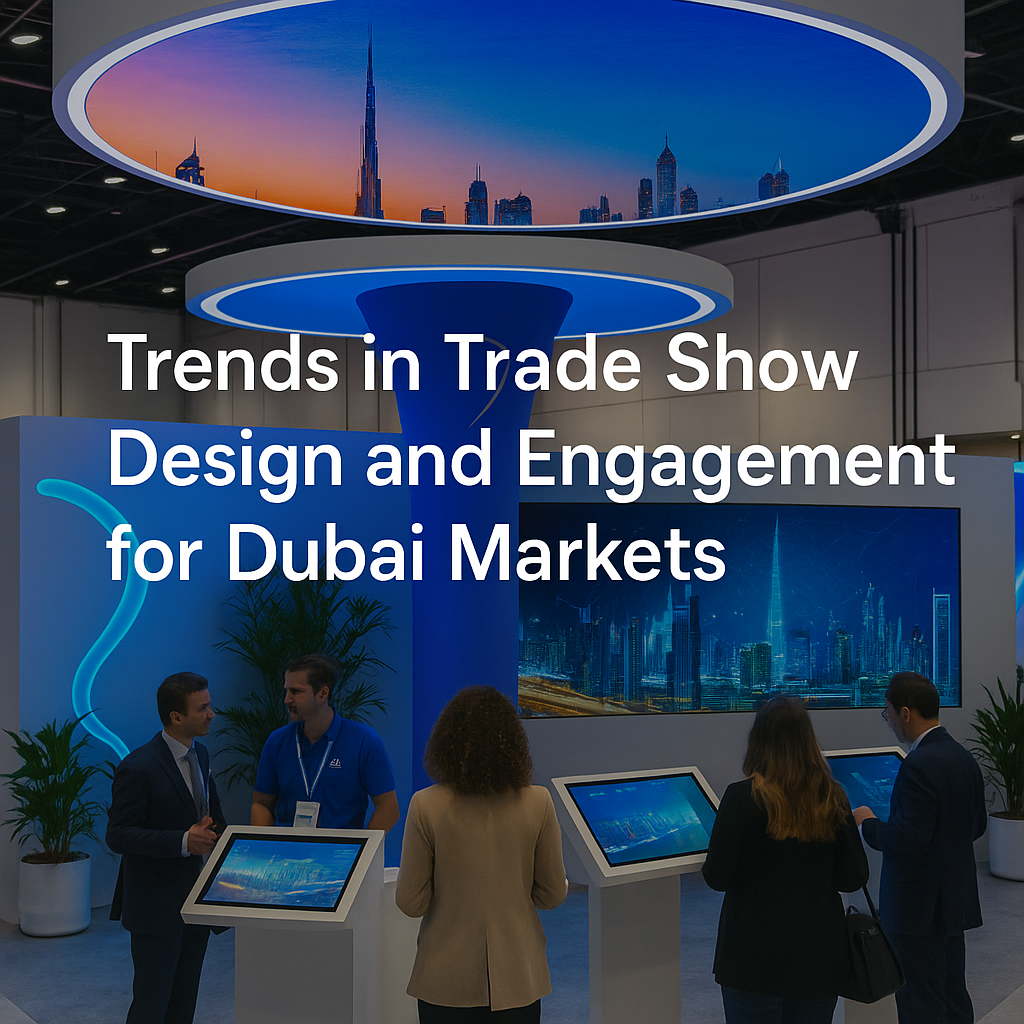
By Celestine Event | Where Innovation Meets Execution Dubai is not just a global exhibition hub—it’s a design-forward, experience-first trade show capital. As competition intensifies for attention, partnerships, and qualified leads on the floor, exhibitors in Dubai are shifting toward immersive, interactive, and culturally intelligent design strategies. From experiential booth layouts to data-driven visitor engagement, here’s your expert guide to the latest trade show design and engagement trends shaping Dubai’s 2025 exhibition market. 🎨 1. Immersive Booth Environments Over Static Displays Gone are the days of brochure racks and passive product stands. In Dubai’s fast-paced event ecosystem, booth design must evoke emotion, tell a story, and transport attendees. Key Features: Local Insight: Brands at Arabian Travel Market and GITEX are using 360° projection mapping, LED tunnels, and multisensory pods to create unforgettable first impressions. 🧠 2. AI-Powered Personalization and Visitor Analytics Dubai exhibitors are integrating artificial intelligence (AI) into booth ecosystems to offer customized interactions and generate valuable behavioral insights. Examples: Tech Partners to Watch: ExpoPlatform, Zenus Analytics, Grip AI Dubai Trend: Major tech pavilions are now optimizing booth design based on AI-generated footfall reports and dwell time metrics. 📲 3. Phygital Integration: Blending Digital with Physical Design The rise of “phygital” (physical + digital) activations is shaping booth design, allowing brands to extend engagement beyond the event space. Engagement Ideas: Middle East Note: With a highly mobile-first audience, brands are enabling app-linked interactions to increase social reach and data collection. 🌍 4. Culturally Adapted Design for Multinational Audiences Dubai exhibitions attract stakeholders from Europe, Asia, the GCC, and Africa. Trade show design in this region must reflect inclusive storytelling and cultural sensitivity. Best Practices: Celestine Insight: We’ve seen higher engagement when VIP zones offer culturally tailored hospitality (e.g., Arabic coffee, majlis-style seating). 🌿 5. Sustainability as a Visual and Strategic Statement Sustainability is no longer optional—it’s an expectation in Dubai’s trade show landscape, especially at Expo City Dubai and DET-regulated events. Design Trends: Pro Tip: Promote your sustainability metrics as part of your booth narrative. Dubai’s corporate buyers and investors increasingly favor ESG-aligned partners. 🎥 6. Content Studios and Broadcast Zones Inside Booths To extend reach and amplify influence, brands are transforming booth space into mini broadcast studios. Features Include: 2025 Forecast: Expect more B2B brands in Dubai to invest in on-site content creation—especially in tech, finance, and luxury segments. 👥 7. Staffing Strategy = Part of Engagement Design Human interaction remains a cornerstone of engagement—but it must be planned, trained, and tech-enabled. Must-Haves: Dubai Practice: Brands that blend live demos with real-time polling see 3x longer dwell time and higher conversion. 🧩 8. Micro-Zoned Booth Layouts for Multiple Personas Rather than “one-size-fits-all” booths, 2025 design strategy leans toward persona-led micro zones. Layout Strategy: ROI Insight: Micro-zoning aligns physical space with buyer intent, improving lead quality and enabling focused follow-up. 🎯 Final Word: Design is ROI in Dubai’s Exhibition Market Dubai exhibitions are evolving from traditional B2B showcases into immersive brand stages. Success today depends on design thinking, audience psychology, and tech synergy. Brands that prioritize engagement through thoughtful design will stand out—and sell more. 📌 Celestine Event Perspective: We don’t just build booths—we craft award-winning, culturally aware trade show experiences powered by smart tech, creative design, and deep regional fluency.
Maximizing Your Presence at Dubai Exhibitions: Pre-Event Marketing 2025

By Celestine Event | Elevating Exhibitor Impact As one of the world’s premier exhibition hubs, Dubai hosts some of the most dynamic B2B and B2C trade shows—from GITEX Global and Arab Health to The Big 5 and Dubai International Boat Show. However, in a city brimming with global exhibitors and high-stakes networking, showing up isn’t enough. Pre-event marketing in 2025 is about strategy, digital influence, personalization, and real-time agility. Exhibitors who prioritize this phase don’t just attract attention—they dominate the show floor. Here’s a comprehensive guide to pre-event marketing strategies tailored for Dubai exhibitions that drive footfall, maximize ROI, and create lasting brand impressions. ✅ 1. Build a Hyper-Targeted Attendee Persona Start with precision. Who exactly are you trying to attract to your booth? Define: Dubai Insight: Your audience is often multinational and multicultural. Use insights from registration data, event app analytics, and past attendee behaviors to personalize your strategy. ✅ 2. Leverage Exhibition-Specific Hashtags and Communities Each major Dubai exhibition has a thriving social media ecosystem months before the doors open. Action Plan: Bonus Tip: Participate in organizer-sponsored email marketing or app-based sponsorship packages that feature your brand. ✅ 3. Geo-Targeted Paid Campaigns Across the GCC & MENA In 2025, B2B targeting is more sophisticated than ever. Launch paid digital campaigns specifically targeted to GCC and MENA attendees already planning travel to Dubai. Suggested Channels: Pro Tip: Use Arabic-English bilingual ad creatives to boost local engagement. ✅ 4. Launch a Dedicated Landing Page with Lead Capture Drive all outreach efforts to a focused, conversion-optimized landing page. Include: Middle East Trend: Add AI chat assistants (like Tidio or Drift) that provide real-time information about your presence. ✅ 5. Pre-Schedule Meetings with High-Value Prospects Your sales team should hit the floor with a packed calendar—not just cold walk-ins. Tools & Tactics: Dubai Pro Tip: Offer to host a coffee or business lunch at a high-end venue near the exhibition—relationship building is crucial in the region. ✅ 6. Create Teaser Content Around Your Event Activation Build anticipation with sneak peeks that hint at what’s coming at the booth. Content Ideas: Deploy across: Instagram Reels, LinkedIn Stories, YouTube Shorts, and WhatsApp Broadcasts. Regional Note: Leverage Arabic-subtitled videos or UAE-specific music tracks for authenticity. ✅ 7. Align Your Sales, Marketing, and Ops Teams on KPIs Exhibition success requires more than visibility. Pre-event team alignment ensures real ROI. Sync On: Use a shared dashboard (e.g., Monday.com, ClickUp, or HubSpot) to track progress in real time. ✅ 8. Offer Pre-Booked Live Experiences and Giveaways Gone are the days of random freebies. Today’s Dubai trade show audience expects exclusive and personalized experiences. Ideas: Insider Insight: Brands with pre-scheduled micro-events enjoy 3x more engagement than passive exhibitors. 🎯 Final Word: Pre-Event = Prime Time In Dubai’s hyper-competitive exhibition scene, success starts weeks or months before the exhibition begins. Pre-event marketing is your only chance to earn attention before the crowd arrives. When executed correctly, it can multiply booth traffic, increase qualified leads, and create the kind of buzz that ripples across digital, media, and regional markets. 📌 Celestine Event Tip: We help brands develop end-to-end exhibitor strategies—from pre-event digital outreach to on-site activations—using data, design, and deep local expertise.
Emerging AI Tools for Event Production and Management in the Middle East
By Celestine Event | Future-Ready Event Intelligence The Middle East—particularly hubs like Dubai, Riyadh, and Doha—is at the forefront of next-generation event innovation. As the demand for large-scale corporate gatherings, luxury brand activations, and hybrid events accelerates, Artificial Intelligence (AI) is transforming how events are planned, produced, and personalized across the region. From intelligent scheduling to immersive guest experiences, AI is no longer a futuristic idea—it’s a competitive advantage. Here’s an in-depth look at the most promising AI tools revolutionizing event production and management in the Middle East, with actionable insights for planners, venues, and agencies. ✅ 1. AI-Powered Event Planning Assistants Traditional planning spreadsheets and manual coordination are giving way to AI co-pilots that automate logistics and decision-making. Tools to Know: Key Benefits: Middle East Use Case: Used in large Dubai Expo 2020 legacy events to streamline multivendor coordination. ✅ 2. Smart Registration & Attendee Profiling AI is optimizing every step of the registration process—from lead capture to intelligent segmentation. AI Features: Result: Highly tailored communication, agenda personalization, and smarter lead scoring for sponsors and exhibitors. Middle East Insight: Common at GITEX Global and STEP Conference, where multilingual AI bots help manage diverse delegate pools. ✅ 3. Generative AI for Content and Media Production AI is revolutionizing content creation in the event ecosystem. Tools to Watch: Applications: Dubai Trend: Luxury brands and automotive expos are now using AI-driven media kiosks for real-time reel generation. ✅ 4. AI in Crowd Management and Safety Real-time crowd analytics powered by AI enhances security, logistics, and flow at large venues like Dubai World Trade Centre or Riyadh Front Exhibition Centre. Solutions: Benefit: Enables dynamic crowd control and optimized booth traffic routing based on real-time data. Middle East Relevance: Adopted heavily during post-COVID regulations at UAE and KSA exhibitions. ✅ 5. Personalized Experiences via AI Recommendation Engines AI is powering Netflix-style personalization in event content and networking. Features Include: Tools: Impact: Higher session engagement, longer dwell times, and enhanced sponsor ROI. Regional Trend: At events like LEAP Saudi Arabia, AI tools matched over 100,000 attendees for curated connections. ✅ 6. AI in Post-Event Analytics and Feedback Forget manual surveys and Excel reports. AI is now delivering instant post-event intelligence. Capabilities: Tools to Know: Dubai Corporate Events Insight: Enterprises are now using AI to compare engagement vs. conversion across hybrid and in-person activations. ✅ 7. AI Integration with Venue & AV Systems Venues across the Middle East are embedding AI directly into their infrastructure and production workflows. Examples: Future Direction: Autonomous event operations—where tech adjusts in real time to optimize ambiance, flow, and impact. 🧠 Final Thoughts: AI Isn’t Optional—It’s Foundational AI is no longer a support tool—it’s a strategic driver of ROI, personalization, and operational excellence. For event professionals operating in the Middle East, adopting AI-powered platforms is essential to stay competitive, scalable, and experience-focused. Whether you’re managing a 10,000-delegate tech summit in Dubai or a VIP roundtable in Abu Dhabi, the intelligent integration of AI into your production and planning process is the way forward. 📌 Celestine Event Insight: We embed AI in everything from attendee mapping to AV optimization, helping clients orchestrate events that are smarter, faster, and more profitable.
Optimizing AV Infrastructure for Large-Scale Dubai Trade Shows
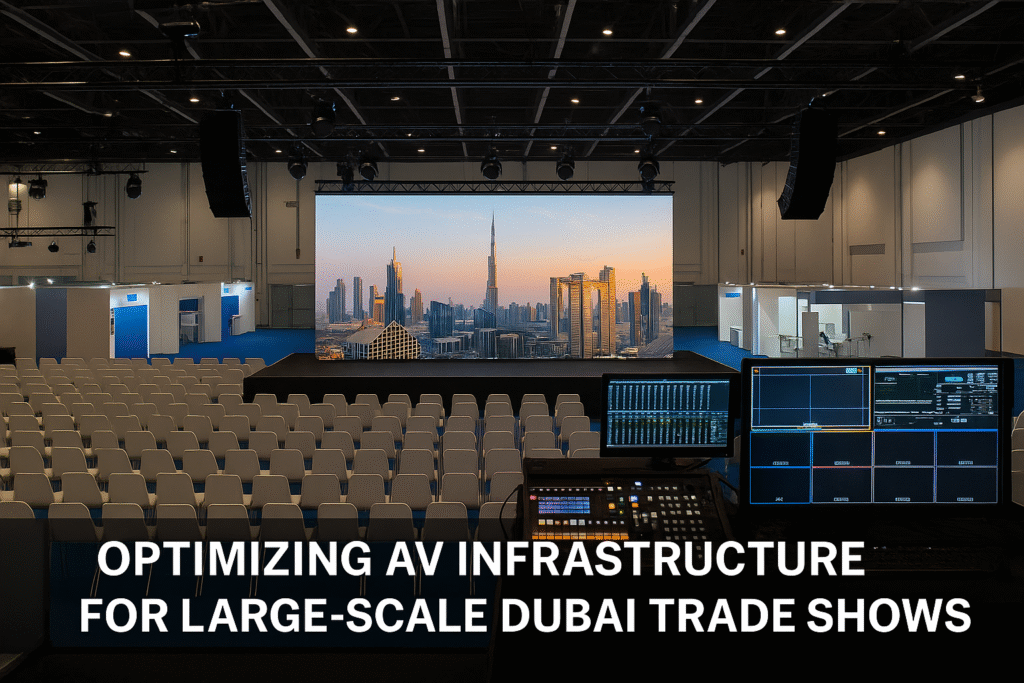
By Celestine Event | Powered by Experience, Ranked for Results Dubai is globally recognized for hosting some of the world’s most ambitious and high-attendance trade shows—from GITEX Global to Arab Health and The Big 5. At the heart of these mega-events lies a critical yet often overlooked factor: audio-visual (AV) infrastructure. Whether you’re a brand exhibitor, event producer, or venue coordinator, optimizing AV is essential to delivering immersive experiences, driving engagement, and achieving ROI. This guide outlines the key best practices and technology considerations for building high-performance AV infrastructure at Dubai’s large-scale trade exhibitions. ✅ 1. Start with a Venue-Specific AV Assessment Each Dubai venue—from Dubai World Trade Centre to Expo City Dubai—has unique layouts, rigging policies, ceiling loads, and in-house AV rules. Checklist: A detailed pre-production site survey saves time, money, and surprise penalties. ✅ 2. Design for High Footfall & Acoustic Challenges Large trade shows in Dubai attract thousands of attendees per hall, making sound coverage and clarity a top priority. Best Practices: Avoid sound spillover that could disrupt nearby exhibitors or presentations. ✅ 3. Invest in Scalable, Modular AV Systems Modularity is key for large exhibitions where multiple zones or stages run simultaneously. Choose AV setups that scale up or down quickly. Solutions to consider: This ensures speed of deployment, consistency across booths, and lower labor costs. ✅ 4. Integrate Hybrid & Live Streaming Capabilities Dubai trade shows attract international stakeholders who often attend remotely. Make your AV setup future-ready and hybrid-friendly. Setup must-haves: Offer virtual access to keynote stages, product demos, or press conferences. ✅ 5. Ensure Real-Time Content Management and Flexibility In a dynamic trade show environment, content is constantly updated—sponsor slides, demo decks, or translations. Smart practices: This minimizes delays and ensures your AV output stays on-brand and on-message. ✅ 6. Build in Redundancy & Fail-Safe Systems With VIPs, media, and regulators often attending Dubai trade shows, any technical failure can have brand-damaging consequences. Your AV contingency plan should include: Downtime is not an option—especially in Dubai’s ultra-competitive event environment. ✅ 7. Prioritize Branding, Ambiance, and Show Control AV is not just functional—it’s an experience builder. Ways to elevate: This transforms your AV from passive display to immersive storytelling. ✅ 8. Collaborate with Expert AV Production Vendors in Dubai Don’t DIY critical AV decisions—Dubai has a deep pool of certified, multilingual AV professionals and specialist production agencies. Ask for: Choose partners familiar with Dubai venue rules, municipality permits, and cultural nuances. 🎯 Final Word: AV Is Your Brand’s Voice At large-scale trade shows, AV is more than technology—it’s your brand’s first impression, key communicator, and differentiator. In Dubai’s fast-moving, premium event market, optimizing AV infrastructure is essential to stand out, engage, and convert. 📌 Pro Tip from Celestine Event: When preparing for Dubai exhibitions, always include AV infrastructure in your first planning phase—not as a last-minute supplier task. We co-design production strategies with venue engineers, creative teams, and marketers to deliver exceptional results at scale.
Managing Virtual and Hybrid Event Production: Best Practices from Dubai
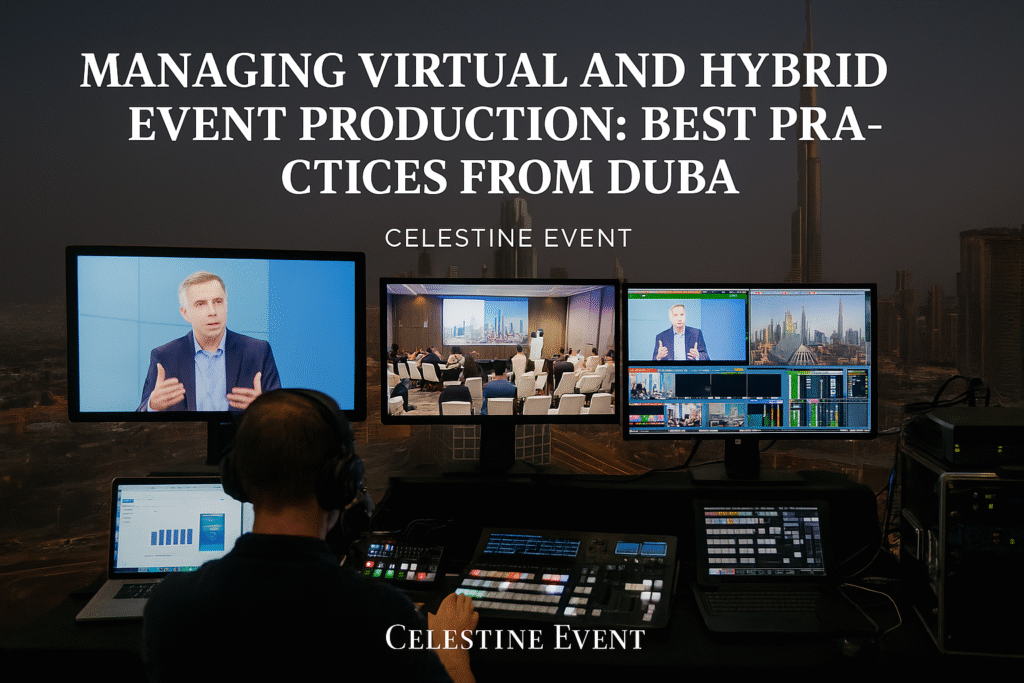
By Celestine Event | High-Impact Event Insights As Dubai cements its status as a global epicenter for innovation, it continues to lead the charge in virtual and hybrid event production. From international trade expos to global tech summits and luxury brand activations, Dubai-based planners are blending technology, strategy, and cultural fluency to deliver immersive, scalable, and resilient event experiences. Whether you’re producing a virtual product launch, a hybrid leadership conference, or a global investor summit, here’s a comprehensive guide to best practices that ensure world-class execution from Dubai’s events industry playbook. ✅ 1. Start with a Clear Hybrid/Virtual Event Architecture Before jumping into tools and platforms, define your event structure: Map the entire event journey—from invitation to feedback—based on audience behavior and tech preferences. ✅ 2. Select the Right Tech Stack: Local and Scalable Dubai’s event production experts prioritize reliable, scalable tech platforms that are compliant with UAE cybersecurity and privacy regulations. Key tools and services: Pro tip: Choose vendors with local data hosting capabilities for sensitive corporate or government events. ✅ 3. Integrate Seamless Audio-Visual and Broadcast Solutions Dubai’s leading AV production teams use broadcast-grade setups that combine physical and digital studio environments. What to ensure: Bonus: Create a branded virtual stage that aligns with your event’s design and sponsor requirements. ✅ 4. Prioritize Accessibility and Localization Dubai hosts audiences from over 180 nationalities. Make your event culturally and technically accessible: Incorporate culturally inclusive graphics, attire, and language to maintain brand integrity and respect. ✅ 5. Create High-Impact Content with Multi-Use in Mind Content is still king—especially when repurposed. Tip: Work with local Dubai content teams who understand Middle Eastern business tone and etiquette. ✅ 6. Design Dual-Track Engagement Strategies Your hybrid event must deliver for two audiences simultaneously—onsite and online. Strategies to use: Engagement parity is key—don’t let your virtual attendees feel like secondary guests. ✅ 7. Set Up Tech Support and Contingency Plans Top-tier virtual/hybrid events run on real-time monitoring and support: Risk management isn’t optional—it’s essential in a region known for its precision-driven event execution. ✅ 8. Analyze, Optimize, and Retarget Post-event, use analytics to optimize your future event strategy: Platforms like Hubilo, BigMarker, and Bizzabo integrate with CRM tools to make this seamless. 🎯 Final Thoughts: Dubai’s Hybrid Edge In Dubai, hybrid and virtual events aren’t seen as backups—they’re brand-building platforms that open global access. With its cutting-edge infrastructure, multicultural talent pool, and relentless innovation, the city offers an ideal model for future-proof event production. Whether you’re catering to regional markets or global audiences, mastering hybrid delivery is now a core capability—not a nice-to-have. 📌 Pro Tip from Celestine Event: When planning hybrid events in Dubai, co-produce with a local expert who knows venue capabilities, regulatory expectations, and tech execution inside-out. It saves cost, avoids risk, and elevates impact.
Checklist for Selecting Production Vendors in Dubai’s Event Industry
In the fast-paced world of Dubai’s event industry—where high standards meet high expectations—selecting the right production vendor can make or break the success of your corporate event, wedding, or activation. From lighting and sound to staging and video walls, your vendor’s reliability, creativity, and technical capability directly impact your event’s quality and execution. Whether you’re planning a global product launch at Dubai World Trade Centre or a luxury wedding at Atlantis The Royal, this checklist ensures you’re partnering with a production company that delivers seamless, on-brand, and regulation-compliant experiences. ✅ 1. Check Vendor Credentials & Licensing Dubai’s event industry is tightly regulated, especially for large-scale productions. Ensure your vendor: Ask to see licenses and permits, and confirm their experience in handling government or municipality approvals if needed. ✅ 2. Review Portfolio and Industry Experience Look for case studies or portfolios that align with your event type and scale: A seasoned vendor in Dubai will be well-versed in venue-specific restrictions, logistics, and timelines. ✅ 3. Evaluate Equipment Quality and Availability Don’t settle for outdated tech. Ask: A well-equipped vendor reduces risk, avoids last-minute rentals, and ensures better technical control. ✅ 4. Assess On-Site Crew & Technical Expertise Top vendors in Dubai will offer certified technicians, fluent in English and well-versed in international event protocols. Ask about: Also confirm if they offer rehearsal support and live troubleshooting during the event. ✅ 5. Understand Their Planning Process Look for a production company that provides: Process maturity = event stability. ✅ 6. Review Past Client Testimonials and Google Reviews Look beyond what’s on their website. Check: Also consider their reputation with hotels and venues—many of Dubai’s top properties have preferred vendor lists for a reason. ✅ 7. Verify Compliance with Dubai Safety & Municipality Codes Dubai has strict rules around: A good production vendor should be able to navigate DM/DEWA/Nakheel approvals if needed, without compromising your timeline. ✅ 8. Inspect Their Backup & Contingency Strategy Dubai’s high-profile events leave no room for error. Ask: The best vendors plan for worst-case scenarios—so you don’t have to. ✅ 9. Consider Creative Capabilities & Tech Innovation Today’s events demand immersive and Instagrammable moments. Check if the vendor offers: This ensures your production vendor is not just a tech supplier—but a creative partner. ✅ 10. Evaluate Budget Transparency and Payment Terms The last thing you want is surprise costs. Ensure: If a price seems too low, it probably lacks quality or scalability. 🎯 Final Thoughts: Partner, Not Just Vendor In Dubai’s premium event market, a top-tier production vendor doesn’t just fulfill a scope—they elevate your vision, manage your risk, and protect your reputation. Using this checklist will help ensure you select a vendor who meets world-class standards while navigating Dubai’s unique operational landscape. 📌 Bonus: Questions to Ask Before Signing the Contract Want a Trusted Production Partner in Dubai? At Celestine Event, we bring together cutting-edge AV, technical expertise, and flawless execution for high-impact events across the UAE.
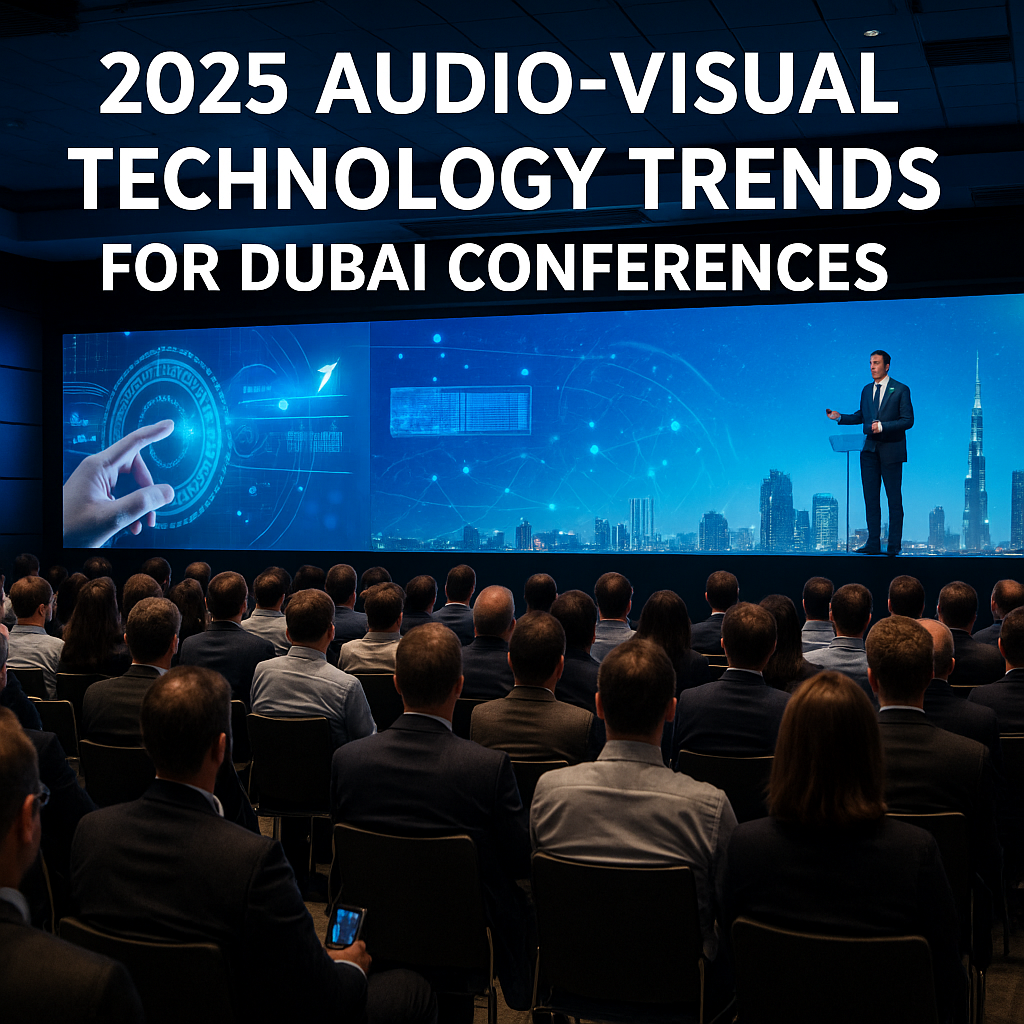
2025 Audio-Visual Technology Trends for Dubai Conferences
In the high-stakes world of business conferences, where impressions matter and engagement is king, Dubai continues to set the benchmark with cutting-edge audio-visual (AV) technology. With Expo City Dubai and venues like Dubai World Trade Centre serving as global hubs for innovation, the UAE’s most dynamic city is leveraging next-gen AV trends to transform the attendee experience. Here’s a deep dive into the top AV technology trends for 2025 shaping Dubai’s corporate event landscape: 1. Immersive LED Walls and 3D Projection Mapping The move from static backdrops to immersive LED displays and 3D projection mapping is redefining visual storytelling. Dubai’s tech-forward venues are incorporating curved LED video walls, motion-responsive visuals, and spatial projection to create dynamic environments that adapt in real time. These tools are perfect for product launches, keynote backdrops, and immersive brand activations—turning a typical stage into a living, breathing part of the presentation. 2. AI-Powered Camera Systems for Smart Filming With AI embedded in AV systems, camera tracking and auto-framing have reached new heights. AI-powered multi-cam systems follow presenters, adjust lighting on the fly, and provide seamless switching for hybrid conferences. This technology ensures flawless broadcasting and recording, essential for events streamed to global audiences or content repurposing across social platforms. 3. Extended Reality (XR) and Holographic Presentations XR—including AR, VR, and MR—has emerged as a headline-grabbing innovation in the Dubai event scene. In 2025, holographic keynote speakers and VR breakout sessions will be more commonplace, allowing event organizers to blend the physical and digital realms. Event producers can bring in virtual guests, simulate environments like future cityscapes, or even host parallel metaverse networking lounges. 4. Advanced Wireless Audio and Acoustic Engineering Clear, immersive sound remains a cornerstone of any impactful event. In Dubai, where multilingual conferences are frequent, AI-based real-time translation audio systems and directional sound technologies are being deployed. Wireless mic systems have also improved with near-zero latency and encrypted channels, perfect for seamless handovers and mobility in large venues. 5. Interactive Touchscreen Tech and Smart Collaboration Tools 2025 conferences in Dubai are emphasizing two-way engagement through interactive AV. Attendees can now participate using giant multi-user touch displays, QR-enabled digital agendas, and smart whiteboards that sync across cloud-based platforms like Microsoft Teams or Zoom Rooms. These integrations are crucial for knowledge-sharing, brainstorming, and facilitating workshops among cross-border teams. 6. Green AV: Sustainable Tech Choices Dubai’s events sector is aligning with the UAE’s sustainability goals. AV suppliers are shifting toward low-energy LED lighting, solar-powered outdoor systems, and modular equipment designed for reuse. With COP28 leaving a legacy of climate responsibility, 2025 is seeing an uptick in sustainable AV sourcing for corporate conferences. Final Thoughts: Why This Matters for Event Planners As hybrid conferences, personalization, and immersive tech become non-negotiables, AV technology is no longer just a line item—it’s the foundation of audience engagement. For Dubai-based event planners, staying ahead of AV trends means delivering world-class experiences that leave lasting impressions. Whether you’re organizing an executive summit, product showcase, or a 1,000-attendee symposium, incorporating these AV innovations will position your event as both cutting-edge and unforgettable. Want to Make Your Dubai Conference Future-Ready? At Celestine Event, we specialize in tech-integrated corporate events that captivate, engage, and inspire. Let’s design your next experience using tomorrow’s technology—today.
Sustainability in Sporting Events: Lessons from Dubai Marathons and Tournaments

Dubai, UAE – As the global focus intensifies on environmental stewardship, Dubai is setting a strong precedent in the world of sustainable sports. Known for its innovation and ambition, the city is proving that large-scale sporting events like marathons and international tournaments can go hand-in-hand with green responsibility. From the Dubai Marathon to DP World Tour golf events and UAE cycling tours, sustainability is no longer an afterthought—it’s embedded in planning, infrastructure, and execution. Dubai’s model provides valuable lessons for cities worldwide seeking to balance scale with sustainability. 1. Green Logistics and Carbon Offset Programs Dubai’s sporting event organizers are making strides in minimizing their carbon footprints. For example, the Dubai Marathon has collaborated with logistics companies to optimize delivery routes, reduce fuel consumption, and offer carbon offset options for participants and sponsors. Electric service vehicles, consolidated freight shipments, and low-emission shuttle buses have become increasingly common. Organizers are also working with platforms like Dubai Carbon Centre of Excellence to track and report emissions transparently. 2. Waste Management: Beyond Recycling Gone are the days when recycling bins were enough. At many Dubai sports events, waste segregation stations, composting zones, and zero single-use plastic policies are the new standard. The Standard Chartered Dubai Marathon has partnered with local environmental NGOs to ensure discarded bottles, nutrition wrappers, and signage materials are collected and reused or repurposed. Some events even use smart bins that monitor fill levels and optimize waste collection. 3. Sustainable Venue Design and Operations Venues like Dubai Sports City, Al Habtoor Polo Resort, and the Jumeirah Golf Estates are increasingly designed or retrofitted for energy efficiency. Features include: These green building efforts are in line with the Dubai 2040 Urban Master Plan, which aims to reduce environmental impact across all sectors. 4. Eco-Conscious Merchandise and Sponsorship Sustainability now extends to event merchandise and branding. Apparel sponsors are producing performance gear using recycled fabrics, biodegradable packaging, and even sea plastic. Notably, several Dubai events have collaborated with eco-certified brands as exclusive partners, signaling a broader shift in sponsorship expectations and stakeholder values. 5. Community Engagement and Environmental Education Many sports events in Dubai double as platforms for environmental advocacy. Organizers integrate: The goal is to move beyond operational sustainability toward lasting behavioral change among residents and visitors alike. 6. Tech-Driven Sustainability Monitoring Dubai’s smart city infrastructure supports data-driven event sustainability. Tools include: This integration of sustainability and technology underscores Dubai’s role as a leader in digital innovation and green thinking. Conclusion: A Blueprint for Sustainable Mega Events Dubai’s model proves that sustainability and spectacle are not mutually exclusive. By embedding environmental practices into every layer of sporting events—from planning and logistics to fan engagement—the city is setting global benchmarks for others to follow. As mega-events like the Dubai Expo legacy projects and future international tournaments evolve, the lessons from Dubai Marathons and related events provide a replicable, scalable framework for cities striving to host responsibly in a climate-conscious era.
Risk Management and Safety Protocols for Major Sporting Events in Dubai

Dubai, UAE — With its rise as a premier global sports destination, Dubai has become home to a growing roster of major events, including the Dubai Duty Free Tennis Championships, Dubai World Cup, and the DP World Tour Championship. Behind the glamour and global attendance lies a sophisticated framework of risk management and safety protocols that ensures every event runs smoothly—often invisibly to the audience. From crowd control and health protocols to emergency preparedness and cyber-security, managing risks at large-scale sporting events in Dubai is a multi-agency, tech-integrated, and culturally sensitive undertaking. Why Risk Management is Paramount Sporting events in Dubai attract tens of thousands of spectators, often from over 100 countries. With this global diversity comes complexity—from language barriers to differing expectations around safety. Any misstep—be it security, health, or logistics—could lead to reputational and financial damage. Organizers and stakeholders (including government bodies, sponsors, and rights-holders) therefore prioritize comprehensive risk assessments during the planning phase. 1. Integrated Emergency Planning Dubai mandates detailed Emergency Action Plans (EAPs) for all Tier 1 sporting events. These include: Such planning ensures a rapid, unified response should an incident occur. 2. Crowd Control and Smart Surveillance With many events taking place in large, open-air venues like the Dubai Autodrome or Meydan Racecourse, managing the flow and behavior of spectators is crucial. Key strategies include: Dubai’s emphasis on smart city infrastructure is a key enabler of efficient, low-friction crowd management. 3. Health & Hygiene Protocols Post-pandemic, health risk management has taken center stage. Protocols include: These are particularly important during multi-day or international tournaments. 4. Cybersecurity and Data Protection As digital fan engagement grows, so does the cyber risk landscape. Events are increasingly targeted for: Dubai’s sports organizers are adopting cyber resilience plans that cover secure Wi-Fi, encrypted ticketing platforms, and GDPR-compliant data handling, especially when handling international spectators’ information. 5. Vendor and Contractor Vetting Dubai’s regulatory ecosystem—particularly under Dubai Sports Council and Dubai Municipality—requires that all third-party vendors go through rigorous compliance screening. This includes: This tightens operational control and reduces risks from outsourced operations. 6. Cultural and Social Sensitivity Risk isn’t only logistical—it’s also reputational. Dubai’s multicultural makeup demands respect for local customs, laws, and religious practices. Organizers must manage: Failure to address these can lead to cultural missteps that go viral, harming brand equity. The Government’s Role The success of risk management in Dubai is in part due to clear governance and enforcement. Key players include: These entities collaborate via centralized command centers with live feeds, cross-agency communication, and real-time decision-making capabilities. Conclusion: A Gold Standard for Global Events Risk management at sporting events in Dubai is not just reactive—it’s proactive, tech-powered, and deeply integrated with the city’s broader vision of safety, innovation, and excellence. As Dubai continues to grow its global sports portfolio—possibly bidding for mega-events like the Olympics or FIFA World Cup—its approach to safety and risk will remain a benchmark for the world.
Enhancing Fan Engagement at Dubai Sports Events with Tech Innovations

1. Smart Stadium Experiences Several stadiums in Dubai, including Al Maktoum Stadium and Coca-Cola Arena, have invested in smart technologies such as: This not only improves fan satisfaction but also offers valuable data insights to organizers and sponsors. 2. Augmented Reality (AR) and Virtual Reality (VR) Tech-savvy audiences in Dubai are increasingly drawn to immersive AR and VR experiences. At major sporting events, fans can: Brands that sponsor such features gain high recall value and position themselves as innovation leaders. 3. AI-Driven Personalization Event organizers are leveraging machine learning algorithms to offer tailored experiences such as: This creates a more intimate fan-venue relationship, turning one-time spectators into loyal brand ambassadors. 4. Fan Tokens & Blockchain Integration As Dubai aligns with Web3 ambitions, some sports clubs and event organizers are experimenting with fan tokens and blockchain-based loyalty programs. These tokens enable fans to: The result? A gamified loyalty ecosystem that thrives on digital ownership. 5. Social Media & Real-Time Content Dubai’s sports entities are harnessing the power of real-time digital storytelling. Whether it’s: The strategy is clear: make fans feel like co-creators, not just consumers. Sponsored content is also seamlessly embedded into these formats, offering measurable brand visibility. 6. Fan Engagement Zones At events like the Dubai Rugby Sevens or Dubai Duty Free Tennis Championships, physical fan zones equipped with interactive tech—like gesture-controlled games, instant photo booths, and digital autograph stations—serve as hybrid physical-digital ecosystems. These zones are ripe for brand activations, with measurable traffic and high engagement rates. Why It Matters for Brands and Organizers For brands, this evolution means more touchpoints to engage fans, better data analytics, and stronger ROI justification. For organizers, it means higher ticket sales, repeat attendance, and premium sponsor interest. As Dubai positions itself as a global sports innovation hub, embracing tech for fan engagement isn’t just a trend—it’s a strategic imperative. Conclusion The future of sports in Dubai lies at the intersection of experience and innovation. In a city built on bold ambition, enhancing fan engagement through technology is more than an upgrade—it’s an expectation. For stakeholders ready to innovate, the playing field has never been more exciting.