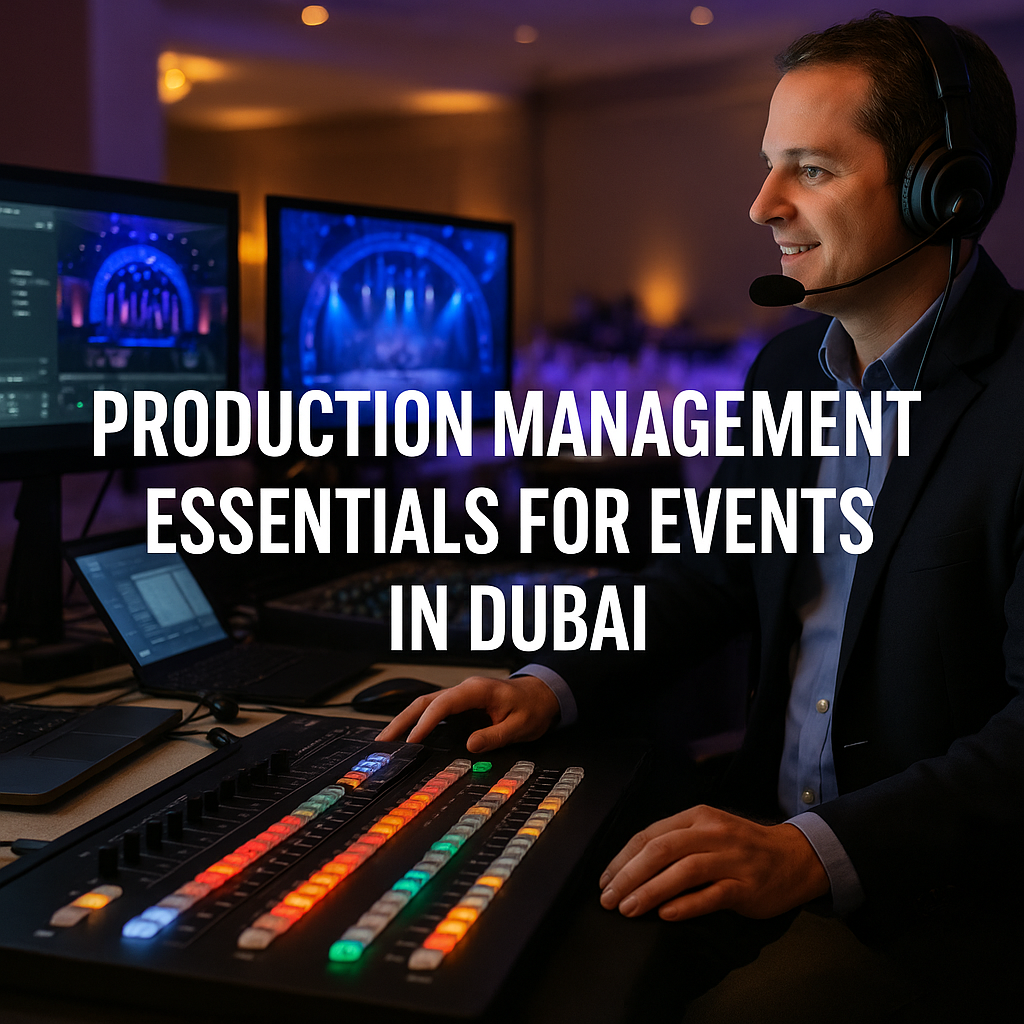
Introduction to Event Production Management
Event production management encompasses the planning, coordination, and execution of events, ensuring that each aspect aligns with the envisioned goals and standards. In a vibrant and rapidly evolving city like Dubai, known for its diverse cultural landscape and booming business events, effective event production management is paramount. This multidisciplinary approach integrates project management, logistics, marketing, and stakeholder engagement to create memorable experiences that resonate with attendees.
One of the principal significance of event production management lies in its ability to streamline processes and enhance the overall event experience. By meticulously orchestrating the many moving parts—such as venue selection, technology integration, and audience engagement strategies—event production managers can transform initial concepts into successful, impactful events. In the context of Dubai, where the expectations for events are exceptionally high, mastering these elements is vital for attracting local and international participants.
Moreover, the cultural nuances of Dubai necessitate a tailored approach to event production management. Understanding the local traditions, preferences, and business etiquettes can significantly elevate an event’s efficacy. Professional event managers not only navigate the logistical hurdles but also harmonize the content and format of events with Dubai’s rich heritage and contemporary values. This alignment increases engagement and fosters a sense of community, ensuring that attendees leave with a positive and memorable experience.
Ultimately, the success of any event in Dubai hinges upon the principles of effective production management. It underpins the entire lifecycle of an event, from inception to completion, solidifying its role as an essential component in the evolving landscape of event planning in the city. As the event industry in Dubai continues to flourish, so too will the significance of proficient event production management.
Understanding the Dubai Events Landscape
The events landscape in Dubai is distinguished by its vibrant diversity and a dynamic array of offerings that cater to various audiences. This multifaceted environment encompasses corporate events, extravagant weddings, and large-scale festivals, each necessitating careful planning and execution. With a burgeoning economy and a growing reputation as a global business hub, corporate events are predominant, attracting multinational companies and organizations looking to make a significant impact. These events often range from seminars and conferences to product launches and networking gatherings, showcasing the latest innovations and fostering professional relationships.
Weddings in Dubai are exceptionally grand and luxurious, reflecting the cultural richness and heritage of the region. Often characterized by elaborate decorations and numerous guests, wedding planning in Dubai requires a deep understanding of both local customs and contemporary trends. This duality influences everything from venue selection to catering services, ensuring that each event resonates with cultural significance while appealing to modern sensibilities. The city offers a variety of exquisite locations, including lavish hotels and stunning outdoor venues, allowing couples to create memorable celebrations.
Additionally, the festival scene in Dubai is particularly robust, featuring events like the Dubai Shopping Festival and Art Dubai, which draw thousands of visitors locally and internationally. These festivals not only promote cultural exchange but also significantly boost tourism, contributing to the local economy. Seasonality plays a critical role in this landscape, as event planners must navigate hot summers and cooler winters, often scheduling outdoor events accordingly. Moreover, legal considerations such as permits and regulations must be adhered to in order to ensure compliance with Dubai’s laws and cultural norms, making a thorough understanding of the local landscape essential for successful event production.
Essential Skills for Effective Production Managers
In the dynamic landscape of event production in Dubai, effective production managers must possess a specific skill set that allows for the successful execution of diverse events. Among these essential skills, project management stands as a cornerstone. A proficient production manager must be able to oversee the entire lifecycle of an event, from planning and coordination to execution and post-event evaluation. Utilizing project management tools and methodologies ensures that timelines are adhered to, tasks are delegated appropriately, and goals are met efficiently.
Another critical skill is budgeting. Production managers are tasked with creating comprehensive budgets that encompass all aspects of the event, including venue costs, equipment rental, staffing, and marketing expenses. The ability to devise a budget that aligns with the client’s vision while also maintaining financial viability is paramount. In Dubai’s competitive market, savvy negotiation with vendors and suppliers is also essential to secure the best possible rates without compromising quality.
Time management cannot be overstated in the realm of event production. Production managers must juggle multiple responsibilities simultaneously, often under tight deadlines. The skill to prioritize tasks effectively not only aids in the smooth progression of event preparations but also serves to alleviate stress among team members, fostering a more productive environment.
Moreover, communication plays a vital role in the success of an event. A production manager must be adept at conveying clear and precise information to various stakeholders, including clients, team members, and vendors. This competency helps in building strong relationships and ensuring that everyone involved understands their roles and responsibilities. For instance, during a large-scale corporate event in Dubai, clear communication channels can prevent misunderstandings that lead to costly delays.
Lastly, negotiation skills are crucial for handling contracts and resolving conflicts that may arise during the planning and execution phases. A production manager equipped with strong negotiation abilities can effectively advocate for their team and clients, ultimately leading to more favorable outcomes.
Key Stakeholders in Event Production
Event production is a multifaceted endeavor that typically involves several key stakeholders, each playing a crucial role in ensuring the success of an event in Dubai. Understanding their functions and contributions is integral for effective stakeholder management. The foremost stakeholders include clients, vendors, sponsors, and local authorities, each with distinct responsibilities.
Clients are often the initiators of the event, defining the objectives, budget, and overall vision. Their expectations significantly impact the planning process, requiring clear communication and understanding of their needs. Engaging with clients throughout the event lifecycle ensures their vision is translated into reality, fostering satisfaction and potential for future collaborations.
Vendors, ranging from caterers to audiovisual services, also play a vital role in bringing events to life. They provide the necessary resources and expertise that facilitate event logistics. Effective coordination with vendors is essential in managing timelines and quality of services, thereby influencing the overall production success. Establishing strong relationships with reliable vendors can enhance operational efficiency and reduce the risk of complications.
Sponsors represent another critical stakeholder group, often providing financial support or in-kind contributions. Their involvement can elevate the status of an event while offering them valuable exposure and engagement opportunities. Managing sponsorships involves clear agreements on brand visibility and return on investment. This collaboration not only enhances the event but also builds long-term partnerships.
Finally, local authorities are pivotal in navigating legal regulations, permits, and safety standards. Their involvement safeguards compliance and addresses community concerns, ensuring a smooth execution. Active engagement with these authorities demonstrates respect for local governance, which can foster goodwill and facilitate future events.
In summary, effective stakeholder management in event production in Dubai involves collaboration and continuous communication among clients, vendors, sponsors, and local authorities. By recognizing and addressing the diverse interests of these stakeholders, event professionals can achieve collaborative success and enhance their event’s potential impact.
Budgeting and Financial Management for Events
Effective budgeting is fundamental to ensuring the success of any event, particularly in a vibrant market like Dubai. An event budget serves as a comprehensive roadmap that outlines all projected expenses and anticipated revenues. One of the first steps in budgeting for events is identifying key cost factors, which typically include venue rental, catering services, production equipment, staffing, decor, and permits. Each of these components can vary significantly in cost based on the scale and type of the event, as well as the specific requirements set forth by local regulations.
When considering venues, it is advisable to conduct thorough research on various locations, including their associated rental fees and additional costs for amenities. Often, venue costs may also encompass logistical expenses such as utilities and security, which should be factored into the overall budget. Catering is another critical area where costs can fluctuate widely, depending on the menu selections, dietary restrictions, and guest count. It is beneficial to obtain quotes from multiple catering providers to find a suitable balance between quality and affordability.
In addition to these primary expenses, budgeting for production services is vital, particularly for larger events requiring audio-visual equipment, staging, and lighting. Engaging reputable vendors can mitigate risks related to subpar services that might compromise event quality. Additionally, obtaining necessary permits in Dubai can incur costs, and it is important to start this process early to avoid potential delays.
Best practices for financial management throughout the event lifecycle include regular monitoring of expenses, maintaining clear communication with vendors, and being flexible to accommodate unforeseen circumstances. By establishing a contingency fund, event planners can navigate unexpected expenses without derailing the entire budget. Overall, strategic planning, diligent research, and proactive financial management are central to the successful execution of events in Dubai.
Venue Selection and Logistics
When organizing events in Dubai, the selection of an appropriate venue plays a critical role in the overall success of the production management process. Dubai offers a plethora of venues, ranging from luxurious hotels and expansive convention centers to unique outdoor locations. Each option presents its own set of benefits and challenges, necessitating a thorough assessment to align with the event’s requirements, budget, and expected attendance.
Understanding the available venues in Dubai starts with identifying the type of event one wishes to host. Corporate events may benefit from venues equipped with state-of-the-art technology and ample space for breakout sessions, while social gatherings might prefer more intimate settings or scenic outdoor backdrops. The layout of the chosen venue is equally essential; it should facilitate the desired flow of activities, from registration and networking to sessions and catering. For instance, an open floor plan may encourage mingling, while a theater-style setup could better serve presentations.
Accessibility is another paramount consideration in venue selection, particularly in a bustling city like Dubai. Ensuring that the venue is easily reachable by public transport and has adequate parking facilities can significantly enhance attendee satisfaction. Additionally, factors such as wheelchair accessibility and proximity to accommodation should not be overlooked, as they contribute to a more inclusive event environment.
Moreover, understanding vendor needs and integrating them into the venue selection process is vital. Catering services, audiovisual requirements, and other logistics must be accommodated to ensure a seamless event execution. The influence of venue choice on production logistics cannot be understated; it affects everything from load-in and load-out procedures to vendor coordination, ultimately shaping the attendees’ experience. Therefore, careful consideration of venue selection and logistics planning is not just a task, but a foundational element of successful event management in Dubai.
Technology and Innovation in Event Production
In recent years, technology has profoundly transformed the landscape of event production in Dubai, incorporating innovative solutions that optimize efficiency and enhance attendee experiences. The integration of advanced audio-visual equipment has emerged as a pivotal element in delivering high-quality experiences at various events, including corporate functions, exhibitions, and entertainment shows. State-of-the-art sound systems, high-definition video displays, and immersive lighting setups are vital tools that allow organizers to create engaging atmospheres, ensuring that every presentation captivates its audience.
Moreover, event management software has revolutionized the planning and execution processes. These platforms facilitate seamless collaboration among various stakeholders, providing functionalities such as budgeting, registration, scheduling, and real-time communication. Efficient event management software increases productivity by streamlining workflows and minimizing manual errors, allowing event planners to focus on delivering exceptional experiences. In Dubai, where events attract global participants, using such technologies is vital for smoothing operations and ensuring timely execution.
Additionally, innovative staging solutions are gaining prominence in the realm of event production. Customizable stages, modular setups, and creative designs allow for unique presentations tailored to the event’s theme and goals. Mirroring the aspirations of Dubai’s dynamic environment, these innovative solutions emphasize flexibility and creativity, enhancing the overall visual appeal of events. Furthermore, some production companies are incorporating augmented and virtual reality technologies to create immersive experiences that engage attendees on a deeper level.
As the event production landscape evolves, the strategic application of technology remains an essential factor in ensuring the success of events in Dubai. By embracing these advancements, organizers not only improve operational efficiency but also significantly enrich the experiences of their attendees, thereby setting a higher standard for future events.
Risk Management and Contingency Planning
In the realm of event production, particularly in a dynamic environment like Dubai, risk management is paramount. It serves as a framework for identifying potential risks that could disrupt an event’s execution. These risks may stem from various sources, including environmental factors, technical failures, or logistical challenges. A comprehensive risk assessment enables event planners to evaluate potential threats and determine their likelihood and impact. This proactive approach allows producers to prioritize risks and allocate resources efficiently to mitigate them.
Once risks have been identified, creating contingency plans becomes the next critical step. These plans outline the necessary actions to take in case of unforeseen circumstances. For instance, if inclement weather threatens an outdoor event, a contingency plan might include an alternative indoor venue or provisions for temporary cover. Additionally, contingency plans should also address scenarios such as equipment malfunctions, changes in vendor availability, or health-related emergencies. By planning for these situations, event managers can ensure a seamless experience, preserving the event’s integrity and achieving the desired outcomes.
Establishing safety protocols further strengthens the overarching risk management strategy. These protocols should encompass health and safety measures designed to protect all event stakeholders, including attendees, staff, and vendors. Implementing a systematic approach to safety helps in preventing accidents and managing emergencies effectively. Training staff on these protocols ensures everyone understands their roles in maintaining safety and responding to incidents. Furthermore, clear communication with participants regarding safety measures can enhance their overall experience and confidence in the event’s organization.
Ultimately, effective risk management and contingency planning are vital to ensure that events in Dubai are executed smoothly, despite any potential challenges. By adeptly identifying risks, crafting robust contingency measures, and enforcing strict safety protocols, event producers can mitigate disruptions and deliver successful outcomes.
Conclusion and Future Trends in Event Production Management
As we have explored throughout this blog post, effective production management is crucial for successful events in Dubai. The multifaceted nature of this field requires an understanding of logistics, stakeholder coordination, and engagement strategies. A well-executed event depends not only on meticulous planning but also on a proactive approach to the dynamic challenges that may arise. The importance of adapting to varied attendee expectations cannot be overstated, as this forms the foundation of a meaningful experience.
Looking ahead to future trends in event production management, several key themes are emerging. Firstly, sustainability is anticipated to take a front seat, with a growing emphasis on eco-friendly practices in the planning and execution of events. From utilizing renewable resources to minimizing waste, event organizers are increasingly recognizing the importance of creating green events, aligning with global environmental goals and the preferences of conscientious attendees.
Secondly, digital engagement is expected to become more prominent in event production management. The rise of hybrid events, which blend physical and virtual experiences, has redefined how audiences interact and participate. Technologies such as augmented reality and interactive applications are gaining traction, providing immersive experiences that enhance attendee connectivity and involvement. Organizers who integrate these digital tools will likely capture a broader audience and ensure stronger engagement.
Finally, as attendee expectations continue to evolve, event producers must remain adaptable and responsive. Comprehensive feedback mechanisms, innovative content curation, and personalized experiences are becoming essential elements in successful event strategies. By staying attuned to the preferences of their audience, event professionals in Dubai can ensure that their offerings remain relevant and compelling.