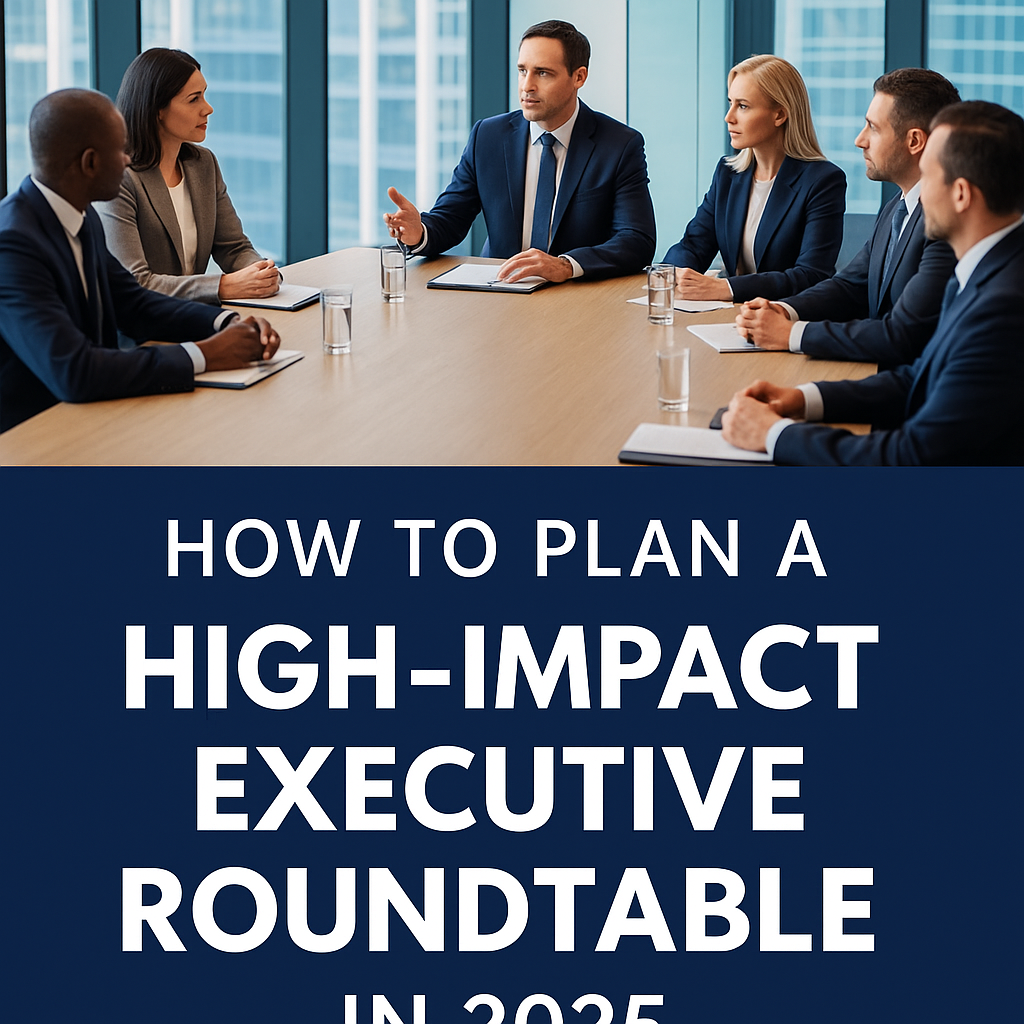
In 2025, executive roundtables are more than just formal gatherings they are strategic platforms for high-level discussions, collaborative innovation, and brand positioning. Whether you’re hosting C-suite leaders, key clients, or thought leaders, a well-orchestrated roundtable can elevate your business credibility, spark valuable insights, and drive impactful partnerships.
So, how do you create a high-impact executive roundtable? Here’s your comprehensive guide to curating an experience that resonates with decision-makers and leaves a lasting impression.
1. Define the Objective with Precision
Start by identifying why you’re hosting the roundtable. Is it to:
- Launch a new product or service?
- Build relationships with top clients?
- Position your brand as a thought leader?
- Gather insights on market trends?
A clearly defined objective ensures the agenda, speakers, and discussions align with your strategic goals.
2. Curate an Exclusive Guest List
Executive roundtables thrive on quality over quantity. Limit the group to 10–20 senior-level participants who bring value to the conversation. Use titles such as:
- CEO, COO, CFO
- Chief Marketing/Technology Officers
- Managing Directors
- Influential founders
Ensure diversity in industries and viewpoints for dynamic dialogue.
3. Select a Venue That Reflects Prestige and Purpose
Venue plays a critical role in setting the tone. For high-level roundtables, consider:
- Luxury boardrooms in five-star hotels
- Private suites in iconic buildings (e.g., Burj Khalifa or Dubai Opera)
- Executive lounges or innovation hubs
Ensure privacy, excellent service, AV support, and comfort.
4. Craft a Thought-Driven Agenda
Design a laser-focused, time-efficient agenda around:
- One key theme or challenge
- 2–3 discussion prompts
- A structured open forum
Incorporate moderation by an industry expert or facilitator to guide meaningful conversation and ensure balanced participation.
5. Use Content to Drive Authority
Pre-event:
- Share a branded executive brief or whitepaper on the chosen topic.
Post-event:
- Publish a roundtable summary or insight report.
- Use quotes, testimonials, and findings for content marketing.
- Share content on LinkedIn to enhance brand perception.
This positions your business as a catalyst for smart discussions and innovation.
6. Provide High-Touch Hospitality
The smallest details matter:
- Personalized invites and name cards
- Premium refreshments or fine dining
- Branded welcome kits or thoughtful executive gifts
- Chauffeured transport, valet parking, or concierge-level service
These gestures elevate the perceived value of the experience.
7. Follow-Up Strategically
Post-event engagement is where the magic happens:
- Send a thank-you note within 24 hours.
- Share a concise event report or exclusive insights.
- Offer one-on-one follow-ups or future collaboration meetings.
Turn the momentum of the roundtable into lasting business outcomes.
8. Measure the Impact
Track ROI through:
- New leads or partnership opportunities
- Social mentions or press coverage
- Attendee feedback
- Executive engagement on platforms like LinkedIn
Document success to refine future events and improve ROI.
Facts
Planning an executive roundtable in 2025 isn’t just about logistics it’s about curating an environment for transformation, innovation, and leadership. When done right, it becomes a powerful tool for brand positioning, strategic dialogue, and long-term relationship building.
Whether you’re a corporate leader in Dubai or a global enterprise, these best practices will help you deliver a roundtable experience that resonates and returns.