AR & Mixed Reality at Events: Implementation Guide for Dubai Brands
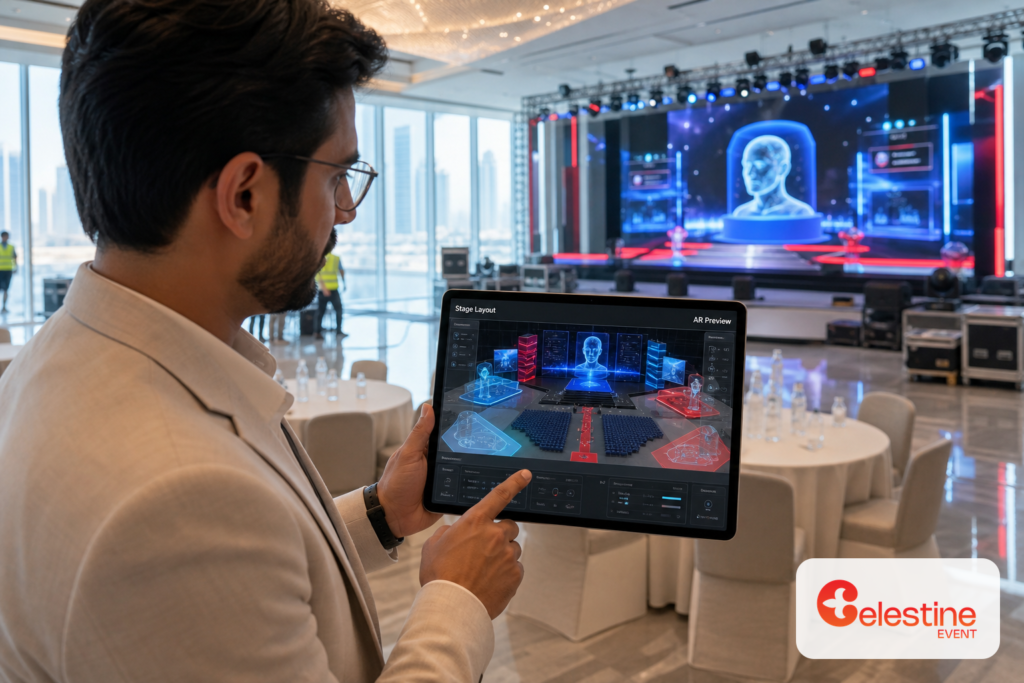
Learn how to implement augmented reality and mixed reality events in Dubai. Step-by-step guide covering tech stack, hardware, design, and avoiding costly
Best Event Venues & Facilities in Dubai & Abu Dhabi: Complete Guide
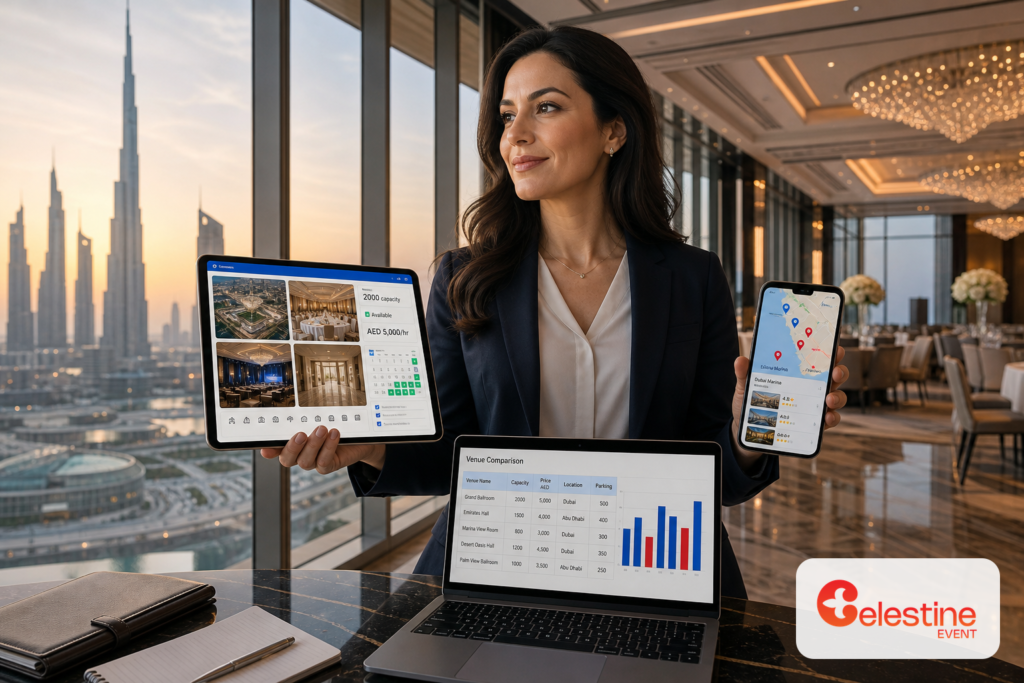
Find the best event venues and facilities in Dubai and Abu Dhabi. Compare hotels, standalone spaces, exhibition halls and outdoor venues for your event.
Luxury Wedding Venues & All-Inclusive Packages in Dubai: The Complete Guide
Explore Dubai’s luxury wedding venues and all-inclusive packages. Learn costs, what’s included, venue types, and booking timelines in this complete guide.
Exhibition Stand Design & Build: Complete Strategy Guide for Dubai
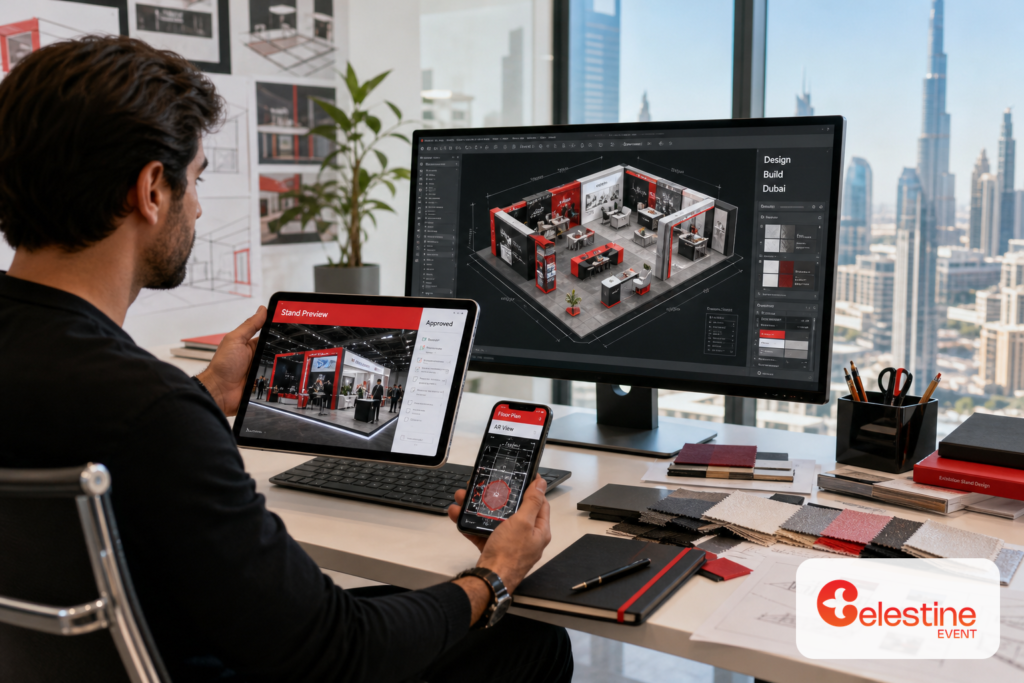
Learn the complete process for exhibition stand design and build in Dubai, from objectives to installation, with regulations, materials, layout planning, and
Why Expo Stall Build Quality Decides Your Visibility, Leads and ROI
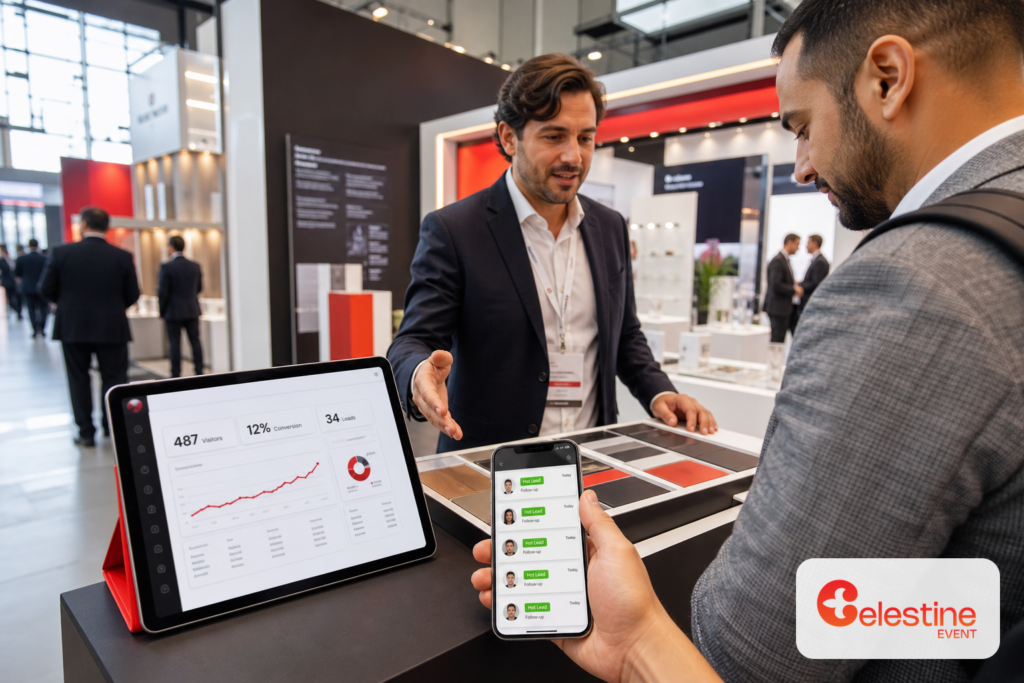
You pay for floor space, travel, staff, samples and marketing. Then visitors walk past your stall without stopping. At most trade shows, the stall is the only thing standing between your investment and your return, and it has a few seconds to earn attention before a visitor moves on. This guide explains why stall build quality drives trade show booth ROI, what poor design costs you, which build elements generate the most leads, and how to choose a builder who treats your stall as a revenue tool rather than a decoration. Why Stall Build Quality Directly Impacts Your Exhibition ROI Exhibition ROI is simple arithmetic: revenue from leads and deals, minus total cost of exhibiting, divided by that cost. Your stall affects every variable on the revenue side. Attraction rate: the share of passing visitors who stop or glance in. Engagement rate: the share of those who start a conversation or interact with a demo. Capture rate: the share of conversations that end in a qualified lead. Close rate: the share of leads that become customers after the show. Your floor space, travel and staffing costs stay the same whether your stall performs or not. A stall that lifts attraction and engagement even modestly spreads those fixed costs over more leads, which lowers your cost per lead and raises your return. That is the core difference between visibility-focused stall design and standard exhibition booth construction. Standard construction asks, “Does it stand up and show our logo?” A visibility-focused build asks, “Can a visitor understand what we do from 10 metres away, and is there a clear reason to step inside?” The first produces a structure. The second produces an exhibition stall design strategy built around traffic flow, sightlines, messaging and conversion. The Hidden Costs of Poor Stall Design & Layout How much revenue are you losing with a poorly designed stall? The exact figure depends on your industry and deal size, but you can estimate it with your own numbers. Here is an illustrative example, not a benchmark: Your total show cost (space, stall, travel, staff, marketing) is $25,000. Your current stall yields 60 qualified leads, and 10% close at an average deal value of $4,000. That is $24,000 in revenue, a net loss of $1,000. A better-designed stall lifts qualified leads to 90 at the same close rate. That is $36,000 in revenue and an $11,000 net gain. In this scenario, the poorly performing stall costs you $12,000 in missed revenue at one show, even though nothing looked “wrong” on the day. Run the same calculation across three or four shows a year and the gap becomes a major budget line. The hidden costs of poor design usually fall into four groups: Lost walk-by traffic: visitors who never register what you sell. Wasted staff time: teams who spend hours talking to unqualified visitors because the stall doesn’t filter or guide. Lead leakage: conversations that end with no data captured because there’s no easy capture point. Brand damage: a cramped, dated or confusing stall signals the same qualities about your product. Strategic Stall Building Elements That Drive Foot Traffic & Lead Capture Which stall build features generate the highest ROI? These are the elements that most consistently improve exhibition visibility tactics and lead performance: 1. A single, instantly readable message Visitors scan aisles quickly. A headline stating what you do and who it’s for, placed at eye level and above the crowd, outperforms a logo wall. Test it by asking a colleague to glance at your design render for three seconds and tell you what you sell. 2. Height and sightlines Overhead signage, hanging structures and tall back walls make your stall visible from across the hall. Check show regulations first, then design for the angles from which visitors will actually approach: corner stalls, for example, need two strong faces. 3. Open, inviting layout Walls and counters across the front act as barriers. Open frontage, a clear entry point and a welcoming first interaction zone lower the psychological cost of stepping in. 4. Zoned interior Separate a demo area, a conversation area and a quiet meeting space. This keeps traffic moving, protects serious conversations and prevents bottlenecks at peak hours. 5. Lighting and focal points Well-planned lighting draws the eye to your product or demo. A strong focal point, such as a live demonstration, interactive screen or hero product display, gives people a reason to stop. 6. Purpose-built lead capture at expos Build capture into the structure: badge scanner stations, tablet kiosks, QR codes at natural stopping points, and a clear qualification flow. A stall with no deliberate capture point depends on staff remembering to ask. 7. Smart storage and staff positioning Hidden storage keeps the floor clear, and a layout that puts staff at the edge of the stall, not behind a counter, makes them approachable. How Stall Visibility Translates to Lead Quality & Sales Conversion Visibility is not only about volume. A well-designed stall improves lead quality in three ways. Self-qualification: clear messaging means visitors who step in already understand your offer, so conversations start further down the funnel. Better conversations: zoned space and uncluttered layout allow longer, more focused discussions with serious buyers. Credibility: a professional presence builds trust before anyone speaks. Prospects are more willing to share budget and timeline details with a company that looks established. How do professional stall builders measure engagement and conversion? Good exhibition stand performance metrics typically include: Footfall counts, via manual tallies, sensors or organiser data. Stop rate: stops divided by passers-by during sample time windows. Dwell time at key zones, such as the demo area. Leads captured per staff hour. Lead quality scores, using your own sales criteria. Cost per qualified lead and post-show pipeline value. Experienced builders set these targets before the show, track them during it, and use the results to refine the next build. Ask any builder you consider whether they do this. Is Your Stall Costing You Leads? Get a Clear Answer If you
How Corporate Event Management Companies in Dubai Operate
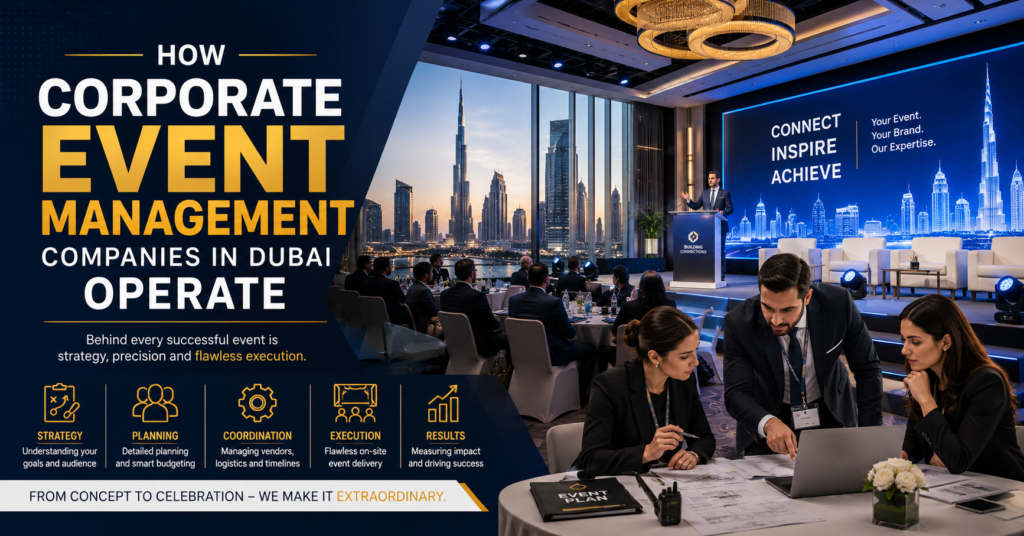
Corporate events have evolved far beyond simple business gatherings. Today, they are strategic platforms for strengthening brands, fostering employee engagement, launching products, building partnerships, and creating lasting customer relationships. In one of the world’s fastest-growing business hubs, corporate event management Dubai has become a specialized industry that combines creativity, logistics, technology, and flawless execution. Dubai hosts thousands of corporate events every year – from executive conferences and shareholder meetings to luxury gala dinners, product launches, awards ceremonies, and international business summits. Behind every successful event is a team of experienced professionals coordinating hundreds of moving parts to ensure everything runs seamlessly. For organizations, understanding how corporate event management companies operate helps in selecting the right partner, optimizing budgets, minimizing risks, and delivering memorable experiences that support business objectives. This guide explains the end-to-end process followed by professional event management companies in Dubai and why their expertise is essential for successful corporate events. What Is Corporate Event Management? Corporate event management is the strategic planning, organization, coordination, and execution of business events designed to achieve specific organizational goals. Unlike social events, corporate events focus on measurable business outcomes such as: Professional event management companies oversee every stage of the event lifecycle – from concept development and budgeting to venue management, production, logistics, and post-event reporting. Why Dubai Is a Global Hub for Corporate Events Dubai has established itself as one of the world’s leading destinations for international business events. Several factors contribute to its popularity: These advantages make Dubai the preferred location for multinational conferences, executive retreats, networking events, incentive programs, and corporate celebrations. How Corporate Event Management Dubai Companies Operate Successful event execution follows a structured workflow that ensures every detail aligns with the client’s business objectives. Step 1: Understanding Business Goals Every successful corporate event begins with discovery. Professional event managers meet with stakeholders to understand: Rather than immediately discussing décor or entertainment, experienced planners focus on the desired business outcomes. Step 2: Event Strategy Development Once objectives are established, the event management team develops a comprehensive event strategy. This typically includes: The strategy acts as the blueprint for the entire project. Step 3: Budget Planning Budget management is one of the most important responsibilities of an event management company. Typical budget categories include: Budget Category Examples Venue Hotel ballroom, conference center, outdoor venue Production Stage, lighting, LED screens, audio systems Branding Signage, backdrops, digital displays Catering Food and beverages Entertainment Hosts, performers, speakers Technology Registration software, live streaming, event apps Staffing Coordinators, ushers, technicians Photography & Video Event coverage and content creation Transportation VIP transfers and logistics Contingency Emergency expenses Effective budget allocation ensures maximum return without compromising event quality. Venue Selection and Management Selecting the right venue influences attendee experience and operational success. Professional planners evaluate: They also negotiate contracts, coordinate with venue managers, and oversee setup schedules. Creative Concept and Event Design Modern business event planning Dubai is built around creating memorable experiences rather than simply decorating venues. Creative teams develop: Every visual element reinforces the company’s identity and event objectives. Vendor Coordination A successful corporate event depends on multiple service providers working together. Typical vendors include: Event managers coordinate contracts, delivery schedules, technical requirements, and quality control. Event Production Production transforms creative concepts into reality. Production teams oversee: Every production element is tested before guests arrive. Guest Registration and Attendee Management Technology plays an increasingly important role in corporate events. Professional companies implement: Efficient attendee management reduces waiting times while improving the overall guest experience. On-Site Event Management Event day requires continuous coordination across multiple teams. Responsibilities include: Experienced event managers remain behind the scenes, ensuring everything runs according to schedule. Risk Management and Compliance Professional event companies identify and mitigate risks before the event begins. Areas of focus include: Risk management protects attendees, staff, and the client’s reputation. Post-Event Evaluation The event doesn’t end when guests leave. Leading event companies conduct comprehensive post-event analysis covering: These insights help improve future events and measure business impact. Technology Transforming Corporate Events Technology has become central to modern corporate events UAE. Popular innovations include: Technology enhances efficiency while creating more engaging attendee experiences. Benefits of Hiring a Professional Event Management Company Organizations often underestimate the complexity of corporate events. Working with an experienced event management company provides several advantages: Professional event managers allow internal teams to focus on business objectives instead of operational challenges. Common Challenges Corporate Event Managers Solve Experienced event planners regularly handle issues such as: Their ability to anticipate and resolve problems minimizes disruption and protects the event experience. How to Choose the Right Event Management Company When selecting an event partner, businesses should evaluate: Choosing the right partner ensures smoother execution and stronger business outcomes. Frequently Asked Questions What does a corporate event management company do? A corporate event management company plans, organizes, coordinates, and executes business events such as conferences, seminars, product launches, exhibitions, awards ceremonies, and executive meetings. Why hire a corporate event management company in Dubai? Professional event managers provide strategic planning, vendor coordination, production expertise, logistics management, and on-site support, ensuring successful events while reducing operational risks. How far in advance should a corporate event be planned? Most medium to large corporate events should begin planning three to six months in advance, while major conferences may require six to twelve months of preparation. What types of corporate events are common in Dubai? Popular events include conferences, exhibitions, networking events, gala dinners, product launches, employee engagement programs, annual meetings, awards ceremonies, and executive retreats. How do event companies measure event success? Success is measured through attendance, audience engagement, lead generation, participant feedback, budget performance, media coverage, and return on investment. Final Thoughts Corporate events have become powerful business tools that strengthen relationships, enhance brand reputation, and support organizational growth. Delivering successful events requires more than creativity it demands strategic planning, technical expertise, meticulous logistics, and flawless execution. Professional corporate event management Dubai companies combine these capabilities to transform business objectives into memorable experiences. Whether organizing a leadership summit, product
What Is Exhibition Stand Design and Why It Matters for Brands in Dubai
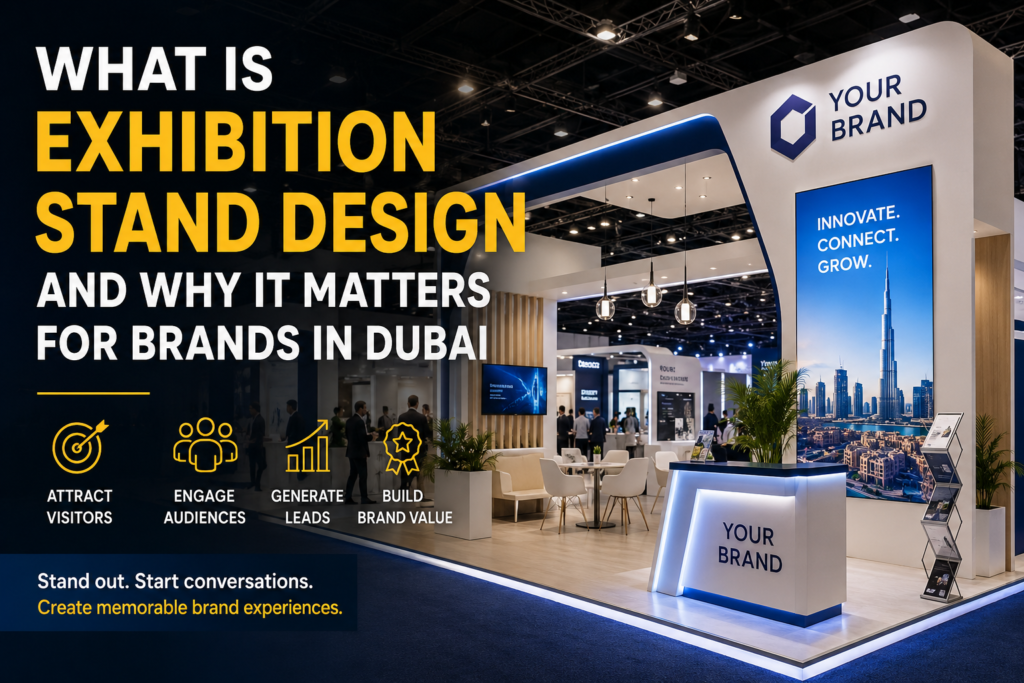
In one of the world’s most competitive exhibition markets, businesses have only a few seconds to capture visitors’ attention. Whether exhibiting at major trade fairs, industry expos, or B2B networking events, companies compete not only with products and services but also with hundreds of visually striking exhibition booths. This is where exhibition stand design Dubai becomes a critical marketing investment rather than just an event expense. A professionally designed exhibition stand communicates a brand’s identity, attracts qualified visitors, encourages meaningful conversations, and creates memorable experiences that translate into business opportunities. Dubai has established itself as a global hub for international exhibitions, attracting businesses from Europe, Asia, Africa, and the Middle East. As the number of exhibitors continues to grow, simply reserving exhibition space is no longer enough. Brands must create immersive environments that differentiate them from competitors. This guide explains what exhibition stand design is, why it matters, how the design process works, and what businesses should consider before partnering with a trade show stand builder in Dubai. What Is Exhibition Stand Design? Exhibition stand design refers to the planning, designing, engineering, and construction of a branded display space used during exhibitions, trade fairs, conferences, and business expos. Unlike ordinary interior spaces, exhibition stands are temporary marketing environments specifically created to: A successful exhibition stand combines marketing strategy, architecture, branding, lighting, visitor psychology, and technology into one cohesive environment. Rather than simply placing banners inside an allocated space, professional stand design transforms an empty exhibition area into a branded destination. Why Exhibition Stand Design Matters in Dubai Dubai hosts hundreds of regional and international exhibitions every year across industries including healthcare, technology, construction, hospitality, food, manufacturing, education, finance, and real estate. Visitors attending these events often encounter hundreds—or even thousands—of exhibitors within a single venue. This highly competitive environment means businesses must work harder to attract attention. A thoughtfully designed exhibition stand helps brands: In many cases, visitors decide whether to approach a stand within just a few seconds. An attractive booth significantly increases the likelihood of meaningful conversations. The Purpose of Exhibition Stand Design A common misconception is that exhibition stand design is purely aesthetic. In reality, design serves several strategic business functions. Brand Visibility Visitors remember brands that present a consistent visual identity. Professional stands incorporate: The objective is immediate recognition. Visitor Attraction Eye-catching structures naturally attract more foot traffic. Elements such as: help exhibitors stand out within crowded exhibition halls. Customer Engagement Modern exhibition stands are designed for interaction. Examples include: Engaged visitors spend more time at the stand and are more likely to convert into qualified leads. Lead Generation Effective booth layouts guide visitors naturally through the exhibition space. Designers carefully position: This improves visitor flow while helping sales teams engage prospects efficiently. Key Components of a Successful Exhibition Stand Professional stand design involves much more than walls and graphics. The most effective stands combine multiple elements. Component Purpose Branding Reinforces company identity Layout Improves visitor flow Lighting Highlights products and attracts attention Graphics Communicates key messages Furniture Creates comfortable meeting spaces AV Technology Enhances engagement Interactive Displays Encourages visitor participation Storage Keeps the booth organized Flooring Defines the exhibition space Signage Improves navigation and visibility Every element contributes to the overall visitor experience. Types of Exhibition Stands Different events require different stand configurations. Shell Scheme Stands These are standardized exhibition spaces provided by event organizers. They are suitable for businesses seeking cost-effective participation while still allowing customized branding. Modular Exhibition Stands Modular systems use reusable components that can be adapted for multiple exhibitions. Advantages include: Many businesses participating in multiple events throughout the year choose modular stands. Custom Exhibition Stands Custom exhibition stands are designed from scratch to reflect a company’s unique objectives. These stands offer complete flexibility regarding: Although they involve higher investment, they typically deliver greater visual impact. The Exhibition Stand Design Process Professional exhibition projects generally follow several stages. 1. Discovery The design team identifies: 2. Concept Development Designers prepare: 3. 3D Visualization Photorealistic 3D renders allow clients to review the stand before production begins. This stage enables revisions before construction starts. 4. Engineering Technical drawings are prepared covering: 5. Fabrication Specialists manufacture: Quality control is maintained throughout production. 6. Installation Experienced teams transport and assemble the stand on-site while complying with venue regulations and event timelines. 7. Dismantling and Storage After the exhibition concludes, reusable components are dismantled, packed, and stored for future events where applicable. Trends Shaping Exhibition Stand Design in Dubai As visitor expectations evolve, exhibition design continues to embrace innovation. Current trends include: These trends not only improve visitor engagement but also enhance operational efficiency and sustainability. Common Mistakes Businesses Should Avoid Even experienced exhibitors can make costly design decisions. Common pitfalls include: Avoiding these issues contributes to a more effective exhibition presence. How to Choose the Right Trade Show Stand Builder in Dubai Selecting the right exhibition partner is just as important as the design itself. When evaluating providers, consider: An experienced stand builder will manage the project from concept through dismantling, allowing exhibitors to focus on engaging visitors. Why Professional Booth Design Delivers Better ROI Exhibitions represent a significant marketing investment. A professionally designed booth helps maximize returns by: When combined with trained booth staff and a clear marketing strategy, effective stand design contributes directly to business development objectives. Frequently Asked Questions What is exhibition stand design? Exhibition stand design is the process of creating branded display environments for trade shows, exhibitions, and business events to attract visitors, showcase products, and generate leads. What is the difference between modular and custom exhibition stands? Modular stands use reusable components and offer flexibility across multiple events, while custom stands are built specifically for a single brand or exhibition, providing a unique and highly personalized appearance. How long does it take to design and build an exhibition stand? Depending on complexity, the process typically takes several weeks, including concept development, approvals, fabrication, and installation. Why is exhibition stand design important in Dubai? Dubai hosts numerous international exhibitions where
Top 10 BTL Marketing & Event Strategies to Grow Your Brand
In a highly competitive business environment, standing out requires more than just online ads and generic promotions. Brands are increasingly turning to BTL (Below-The-Line) marketing a targeted, experience-driven approach that connects directly with audiences, builds trust, and leaves a lasting impression. Unlike ATL (Above-The-Line) marketing, which focuses on mass communication through television, radio, and billboards, BTL marketing strategies are about personal engagement—allowing your brand to interact with customers on a one-to-one basis. Events, activations, product samplings, and experiential campaigns are at the heart of BTL success. Here, we explore the Top 10 BTL Marketing & Event Strategies you can use to grow your brand. 1. Experiential Marketing Events Keyword focus: experiential marketing ideas, consumer engagement tactics Experiential marketing goes beyond traditional promotion it immerses customers in a brand experience. This could be an interactive installation, a themed pop-up shop, or a live brand showcase.For example, a fashion brand might create an interactive runway where customers can try augmented reality (AR) styling before purchasing. Pro tips: 2. Brand Activation Campaigns Keyword focus: brand activation strategies, promotional event ideas Brand activations are high-impact, short-term marketing efforts that create buzz and encourage immediate engagement. Whether it’s a free sampling drive, a street performance, or a surprise giveaway, the aim is to spark conversation and drive action. Pro tips: 3. Product Sampling & Demonstrations Keyword focus: below the line marketing, product demonstration events If your product quality is your biggest strength, let your audience experience it first-hand. Sampling events allow customers to try products before purchase, reducing buying hesitation. Pro tips: 4. Trade Shows & Exhibitions Keyword focus: event marketing campaigns, corporate event marketing Trade shows and exhibitions are a hub for networking, showcasing, and building credibility. They attract targeted audiences already interested in your industry. Pro tips: 5. Guerrilla Marketing Keyword focus: guerrilla marketing, BTL advertising techniques Guerrilla marketing uses unexpected, unconventional tactics to create a strong brand impression. Examples include flash mobs, street art, or creative public installations. Pro tips: 6. Pop-Up Stores & Mobile Brand Units Keyword focus: pop-up events, experiential marketing ideas Pop-up stores are temporary retail spaces that offer exclusive, time-limited experiences. Mobile brand units (vans or kiosks) take the brand experience directly to your customers. Pro tips: 7. Corporate Social Responsibility (CSR) Events Keyword focus: CSR event marketing, community engagement events CSR-driven BTL strategies create positive brand associations while contributing to community welfare. Examples include charity runs, environmental campaigns, and donation drives. Pro tips: 8. Roadshows Keyword focus: BTL marketing strategies, roadshow events Roadshows involve taking your brand on the road to meet customers across different locations. They are ideal for product launches, awareness campaigns, and lead generation. Pro tips: 9. Influencer-Led Live Events Keyword focus: influencer event marketing, consumer engagement tactics Influencers can amplify BTL campaigns by bringing their audience to your event. This could be a live meet-and-greet, a collaborative workshop, or an exclusive launch party. Pro tips: 10. Sponsorship of Niche Events Keyword focus: sponsorship marketing, brand visibility events Sponsoring niche events allows you to tap into highly targeted communities. For example, a fitness brand might sponsor a marathon, while a tech brand might support a hackathon. Pro tips: How to Maximise ROI from BTL Marketing Strategies To make the most of BTL activities: BTL marketing is all about personal connections and immersive experiences. By implementing these top 10 strategies, your brand can build loyalty, attract new customers, and stand out in a competitive market. FAQs on BTL Marketing & Event Strategies Q1: What is BTL marketing?BTL (Below-The-Line) marketing focuses on direct, targeted engagement with customers through experiential events, activations, and personalised campaigns. Q2: How is BTL marketing different from ATL marketing?ATL marketing targets mass audiences through TV, radio, and billboards, while BTL marketing is more targeted, interactive, and experiential. Q3: Which industries benefit most from BTL marketing?Retail, FMCG, hospitality, automotive, technology, and lifestyle brands often see strong results from BTL strategies. Q4: How do you measure the success of a BTL campaign?Metrics include leads generated, sales conversions, event attendance, customer feedback, and social media engagement. Q5: What budget is ideal for BTL campaigns?Budgets vary based on campaign scale, location, and objectives, but even small brands can run impactful BTL events with creative, cost-effective ideas.
How to Personalize Guest Journeys at Corporate Events
In today’s corporate event landscape, attendees expect more than just an agenda and a name badge they expect an experience. Luxury guest personalization transforms an event from a formal gathering into an immersive journey, leaving a lasting impression on every attendee. In this article, we’ll explore how to craft guest journeys that feel exclusive, thoughtful, and unforgettable. 1. Why Personalization Matters in Corporate Events Personalization is no longer an optional luxury it’s a competitive advantage. Guests who feel valued are more engaged, more likely to network, and more inclined to remember your brand or message. According to event industry reports, personalized experiences can increase attendee satisfaction by up to 30% and drive stronger brand loyalty. 2. Understanding the Guest Journey Before you personalize, you need to map the guest journey, which typically includes: Mapping this flow allows you to insert tailored touches at every stage. 3. Pre-Event Personalization Strategies a. Customized Invitations Instead of generic mass emails, send personalized digital or luxury printed invites with the guest’s name, company logo, and a tailored event pitch. b. Personalized Previews Share a curated sneak peek of sessions, menus, or entertainment based on guest interests. c. VIP Concierge Communication Offer a dedicated event concierge for high-value attendees this could be via email, WhatsApp, or a custom event app. 4. On-Site Personalization Tactics a. Personalized Check-In Implement facial recognition check-in or QR code scanning linked to guest profiles for a smooth welcome. b. Customized Name Badges Include not just names, but also job roles, interests, or conversation starters to encourage networking. c. Tailored Seating Arrangements Use guest data to seat people near relevant peers, clients, or industry leaders. d. Bespoke Food & Beverage Options Offer menu personalization such as plated dishes that match dietary preferences shared in advance. 5. VIP Experience Enhancements For luxury guest personalization, small but impactful touches make all the difference: 6. Technology-Driven Personalization Technology enables seamless personalization at scale: 7. Post-Event Personalization a. Customized Thank-You Messages Send personalized thank-you videos or messages referencing their interactions during the event. b. Exclusive Content Access Give VIP guests access to behind-the-scenes footage, extended presentations, or private webinars. c. Feedback-Driven Future Invites Use guest feedback to craft even more tailored experiences for future events. 8. Measuring the Impact Key metrics to evaluate personalization success include: Luxury guest personalization is the secret to transforming a corporate event into an unforgettable journey. By combining thoughtful touches, data insights, and VIP experiences, you create a lasting emotional connection that elevates both the event and the brand hosting it. FAQs 1. What is luxury guest personalization in corporate events?It’s the art of creating a bespoke, tailored experience for each attendee, making them feel valued and exclusive through customized touches at every stage of the event. 2. How can I personalize a large-scale corporate event?Use technology like event apps, RFID tracking, and AI matchmaking to tailor experiences for each guest, even at scale. 3. Is guest personalization expensive?Not necessarily—many impactful personalization strategies are cost-effective, such as custom email journeys, targeted seating arrangements, and tailored session recommendations. 4. What are some quick personalization ideas?Personalized welcome kits, curated playlists, tailored menu options, and dedicated VIP lounges are all quick but effective ideas. 5. How does personalization improve ROI?Personalized experiences increase attendee engagement, brand recall, and conversion rates for post-event actions, directly boosting ROI.
Exhibition Booth Design and Trade Show Success in Dubai: The Complete Guide
Dubai is a global hub for trade shows and exhibitions, attracting international brands, investors, and industry leaders. Events like Arab Health, GITEX Global, and Dubai Airshow bring together thousands of visitors from around the world, offering unmatched opportunities for networking, sales, and brand exposure. In such a competitive environment, exhibition booth design becomes your most powerful marketing tool. Your booth is more than just a space it’s the face of your brand, a sales platform, and an experience that visitors will remember long after the event. This guide will walk you through how to design an impactful exhibition booth in Dubai, integrate local trends, and make the most of your trade show investment. 1. Why Exhibition Booth Design Matters in Dubai’s Trade Show Scene Dubai’s exhibition industry is unlike anywhere else. Here’s why: In a hall filled with hundreds of exhibitors, a well-designed booth can mean the difference between a packed visitor list and being overlooked. 2. Defining Your Trade Show Goals in Dubai Before starting your booth design process, clarify your objectives: Your design choices layout, lighting, graphics should directly reflect these goals. 3. Core Elements of an Effective Exhibition Booth Design in Dubai a) Layout & Space Planning Dubai exhibition venues like the Dubai World Trade Centre can host massive crowds, so your booth must be open, inviting, and easy to navigate. b) Branding & Visual Identity Brand consistency is crucial: c) Lighting Lighting in Dubai exhibitions plays both functional and aesthetic roles: d) Technology Integration Trade shows in Dubai often feature futuristic technology: e) Cultural Sensitivity Dubai is a multicultural environment with Islamic cultural norms: 4. Designing for Visitor Engagement A visually appealing booth is just the start you must also keep visitors engaged. 5. Budget Planning for Dubai Exhibition Booths Exhibition costs in Dubai can be higher than in other regions due to premium venue rates and high-quality standards. Your budget should cover: Pro Tip: Always allocate 10–15% for last-minute expenses or upgrades. 6. Latest Trends in Exhibition Booth Design in Dubai 7. Trade Show Marketing Strategies for Dubai A great booth design needs a great marketing plan: Before the Event During the Event After the Event 8. Common Booth Design Mistakes to Avoid in Dubai 9. Measuring Your Dubai Trade Show ROI Track success using: FAQs Q1: How far in advance should I book my booth for a Dubai trade show? It’s best to secure your booth 9–12 months in advance, as prime locations sell out quickly. Q2: Should I hire a local Dubai booth design company? Yes, local designers understand venue regulations, cultural nuances, and logistical requirements. Q3: What are popular exhibition venues in Dubai? Dubai World Trade Centre, Expo City Dubai, and Dubai Exhibition Centre are top choices. Q4: Can I reuse my booth for multiple events in Dubai? Yes, modular booth designs allow easy reconfiguration for different trade shows. Q5: How do I attract VIP visitors to my booth? Offer exclusive previews, private meeting areas, and personalised invitations before the event.